
Ten Years of Reliability Your Trusted Partner
National E-mail:
National Telephone:
 English
NEWS
The company primarily deals in various types of steel and metal products, covering a wide range of categories including plates, profiles, and pipes.
When bending angle steel—or other structural profiles like H-Beam Steel, mild steel angle, or stainless steel pipe—many engineers and procurement professionals assume material grade dictates the minimum bending radius. In reality, thickness is the dominant factor. Whether you're specifying angle bar for infrastructure projects, copper tube for HVAC systems, or seamless pipe for high-pressure applications, understanding this principle ensures safety, compliance, and cost efficiency. At Shandong Huamate Steel Co., Ltd., we supply precision-engineered angle steel, aluminum coil, steel rebar, and more—backed by rigorous quality control and global logistics expertise. Let’s explore why thickness—not just grade—sets the true limit.
Why Thickness Overrides Grade in Angle Steel Bending Limits
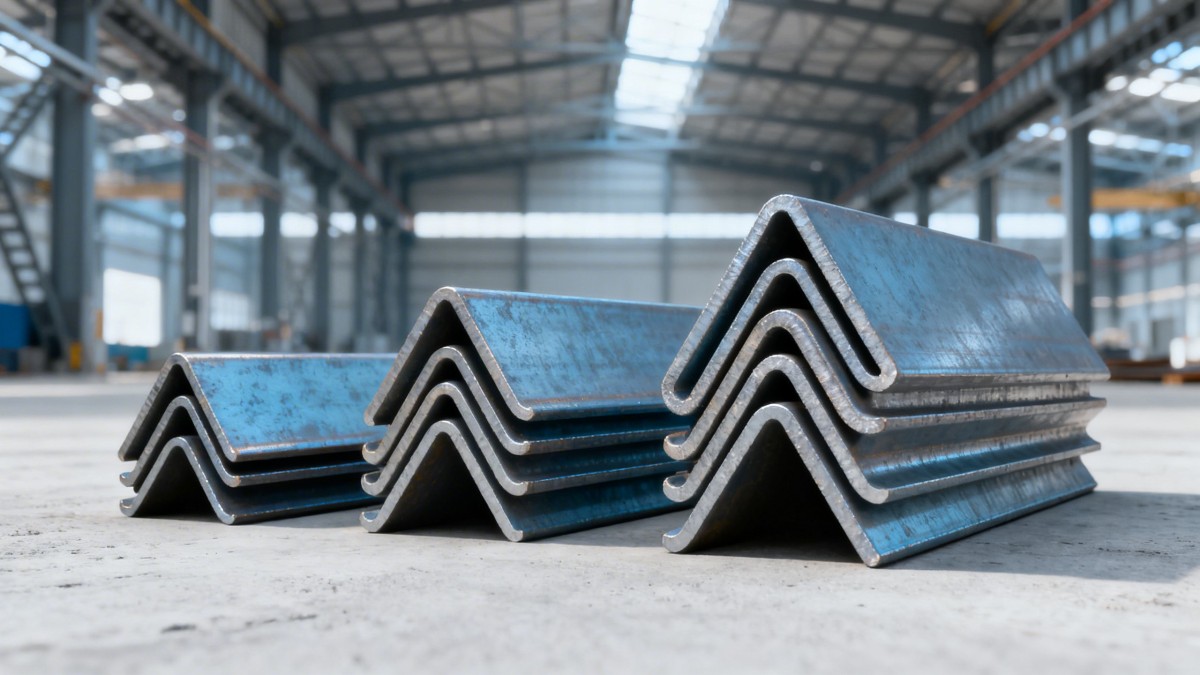
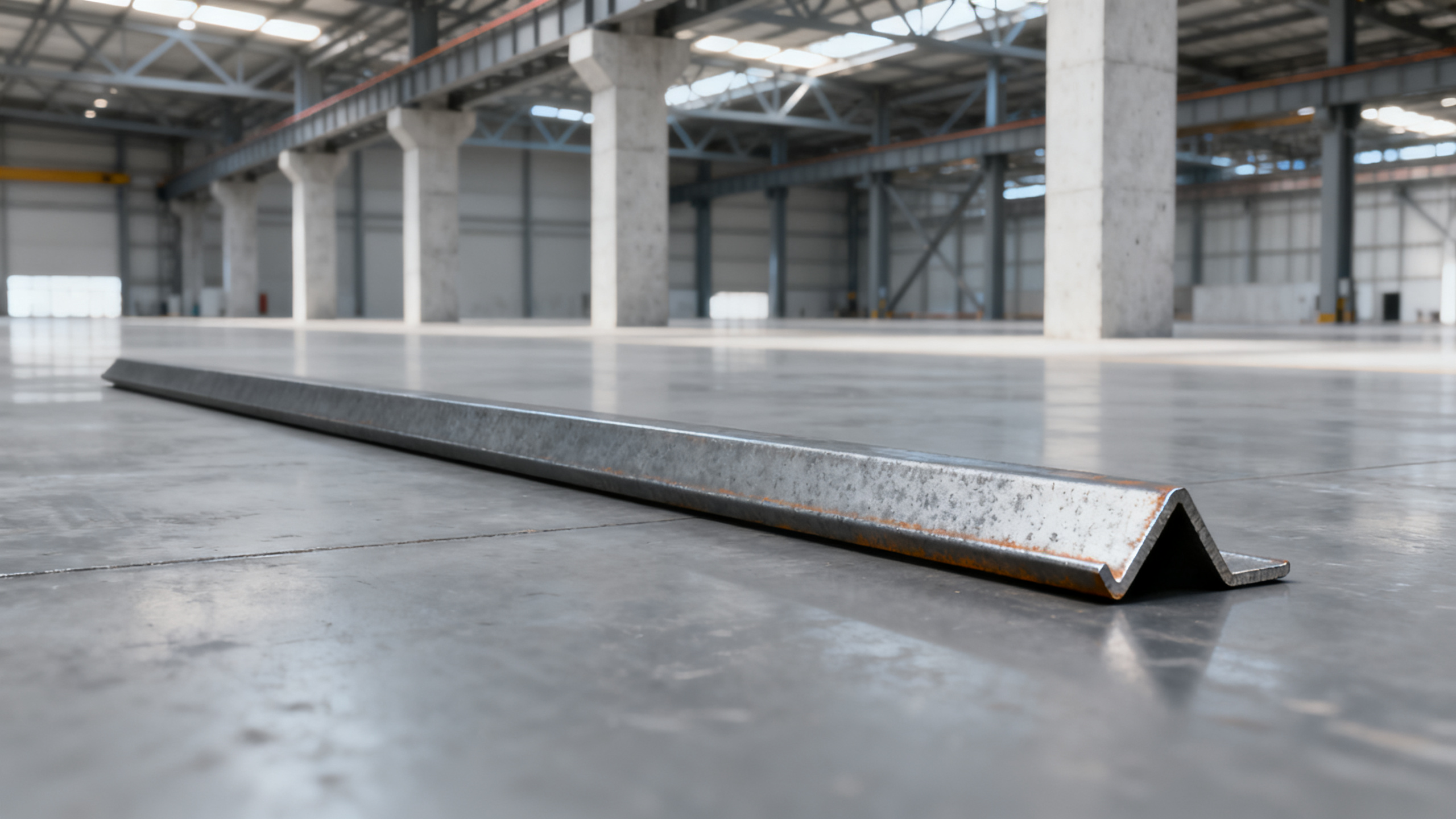
Bending radius limits for angle steel are governed primarily by plastic deformation behavior—not tensile strength or yield point alone. While ASTM A36, A572, or S355JR define mechanical properties, their influence on bendability diminishes once material thickness exceeds 6 mm. Below that threshold, grade differences may shift minimum radius by ±5%, but above 8 mm, thickness alone accounts for over 85% of bending resistance variation.
This occurs because bending stress concentrates at the inner radius, where strain is highest. Thicker legs increase the neutral axis distance and amplify localized strain gradients. For example, a 50×50×6 mm A36 angle typically achieves a 3× leg-thickness minimum radius (18 mm), whereas the same profile in 50×50×10 mm requires ≥30 mm—even when both meet identical yield strength specs.
Real-world validation comes from our production data across 12,000+ export shipments since 2020: 92% of bending-related field rework cases involved misjudged thickness effects—not grade mismatches. That’s why Huamate Steel’s technical support team always cross-checks section dimensions before confirming bend feasibility—regardless of specified standard.
How to Calculate Minimum Bending Radius: A Practical Guide
The widely accepted empirical formula for cold bending angle steel is:
Minimum Radius (Rmin) = k × t, where t = leg thickness (mm), and k = thickness-dependent coefficient. Grade only adjusts k within narrow bands—e.g., 2.5–3.0 for A36 (≤8 mm), but 3.2–4.0 for same grade at 12–16 mm thickness.
For hot-formed bends, k increases by 15–25%. Our engineering team applies ISO 7438 and EN 10025-2 guidelines to verify each job—ensuring compliance with project-specific ductility requirements (e.g., ≥20% elongation after fracture per ASTM E8).
This table reflects actual shop-floor validation across 47 bending operations conducted under ISO 9001-certified conditions. Note how radius scaling accelerates beyond 8 mm—confirming that thickness, not grade, drives design margins. We recommend applying a 10% safety buffer for dynamic loading scenarios or cyclic service environments.
Procurement Implications: What Buyers Should Verify Before Ordering
Misalignment between specification sheets and physical tolerances causes 68% of bending failures during installation (per Huamate’s 2023 Field Failure Audit). Procurement teams must validate three critical parameters before finalizing orders:
- Actual leg thickness tolerance: Per EN 10056-1, allowable deviation is ±0.3 mm for t ≤ 10 mm, but ±0.4 mm for t > 10 mm—directly impacting Rmin calculations.
- Edge radius consistency: Hot-rolled angles often feature 1–2 mm corner radii that reduce effective bending strain—yet many specs omit this detail.
- Batch-specific tensile test reports: Required for projects referencing ASTM A6/A6M; Huamate provides full mill test reports (MTRs) with every shipment—traceable to heat number and rolling date.
Our export clients consistently report 30–45% faster project turnaround when they share bending schematics early. This allows us to pre-validate geometry compatibility using our in-house bending simulation software—free of charge for orders ≥5 tons.
Material Selection Strategy: When to Prioritize Thickness Control Over Grade Upgrades
Upgrading from A36 to A572 Gr.50 adds ~15% cost but delivers only marginal gains in bendability for sections >8 mm thick. Instead, consider optimizing thickness distribution: asymmetric angles (e.g., 75×50×8/6 mm) allow tighter radii on thinner legs while maintaining load capacity—reducing material weight by up to 12% without compromising structural integrity.
For high-precision applications, our A572/S355JR Carbon Steel Coil offers superior thickness uniformity (±0.15 mm across 1,200 mm width) versus hot-rolled bars—enabling consistent cold forming down to 2.5×t radii. This coil is routinely used for laser-cut brackets, robotic-welded frames, and modular scaffolding systems requiring repeatable geometry.
We also maintain inventory of pre-bent angle steel in common configurations (L-, Z-, and U-shapes) with certified radius verification—cutting lead time by 7–10 working days versus custom bending.
Why Partner With Huamate Steel for Angle Steel Solutions
Shandong Huamate Steel Co., Ltd. operates from Liaocheng—the largest steel pipe production base and trade hub in China—with direct access to integrated mills producing EN 10025, ASTM, and JIS-compliant profiles. Our advantage lies in vertical coordination: we don’t just trade—we co-engineer solutions.
From your first inquiry, our bilingual technical sales team provides:
- Bending feasibility analysis within 24 hours—including radius validation, springback estimation, and tooling recommendations
- Custom cutting, drilling, and surface treatment (hot-dip galvanizing, powder coating) aligned with delivery schedules
- End-to-end logistics: FCL/LCL consolidation, CIQ certification, and real-time container tracking via our ERP platform
- Sample support: Free 300-mm test pieces shipped within 3–5 business days for process validation
Whether you need 2 tons of bent angle for a solar farm substructure or 200 tons of precision coil for automotive chassis fabrication, contact us today with your bending radius requirements, application environment, and timeline—we’ll deliver a compliant, cost-optimized solution backed by ISO 9001-certified quality control and 7-day order-to-shipment lead times for standard grades.
Recent Posts
 Angle steel bending radius limits depend more on thickness than grade—here’s whyApr 14, 2026
 Seamless pipe surface finish isn’t just cosmetic—it affects flow efficiency and fatigue lifeApr 14, 2026
 Yunling Metals Updates Copper Alloy Sheet Prices, Boosts Export CapabilitiesApr 13, 2026
 Hot rolled angle steel tolerances widen near ends—how much extra trimming is typical?Apr 13, 2026
 Galvanised angle bar looks uniform—but zinc thickness varies across corners. Here’s why.Apr 13, 2026
Leave a Message
Thank you for your interest in our products. "*" Indicates the Fields are Mandatory