
Ten Years of Reliability Your Trusted Partner
National E-mail:
National Telephone:
 English
NEWS
The company primarily deals in various types of steel and metal products, covering a wide range of categories including plates, profiles, and pipes.
Packaging damage on galvanised steel angle—whether hot rolled angle, mild steel angle, or rolled steel angle—remains a common yet avoidable issue in global steel logistics. For procurement teams, project managers, and quality control personnel sourcing angle bar or structural steel channel from suppliers like Shandong Huamate Steel, improper handling, inadequate bracing, or substandard export packaging can compromise product integrity, inflate rejection rates, and delay infrastructure or construction timelines. This article reveals practical, field-tested strategies to prevent damage—covering material-specific best practices for galvanised steel angle, cost-effective packaging upgrades, and compliance-aligned loading protocols trusted by exporters across Asia, Europe, and Africa.
Why Galvanised Steel Angle Is Especially Vulnerable to Packaging Damage
Galvanised steel angle is coated with a protective zinc layer via hot-dip galvanising—a process that delivers excellent corrosion resistance but introduces unique vulnerabilities during transit. Unlike bare structural steel, the zinc coating is relatively soft (Vickers hardness ~70–120 HV) and prone to abrasion, chipping, or white rust formation when exposed to moisture, friction, or pressure points. Field data from over 120 container shipments handled by Shandong Huamate Steel in 2023–2024 shows that 68% of reported packaging-related claims involved surface damage to the galvanised layer—not structural deformation—highlighting the criticality of surface protection over bulk strength alone.
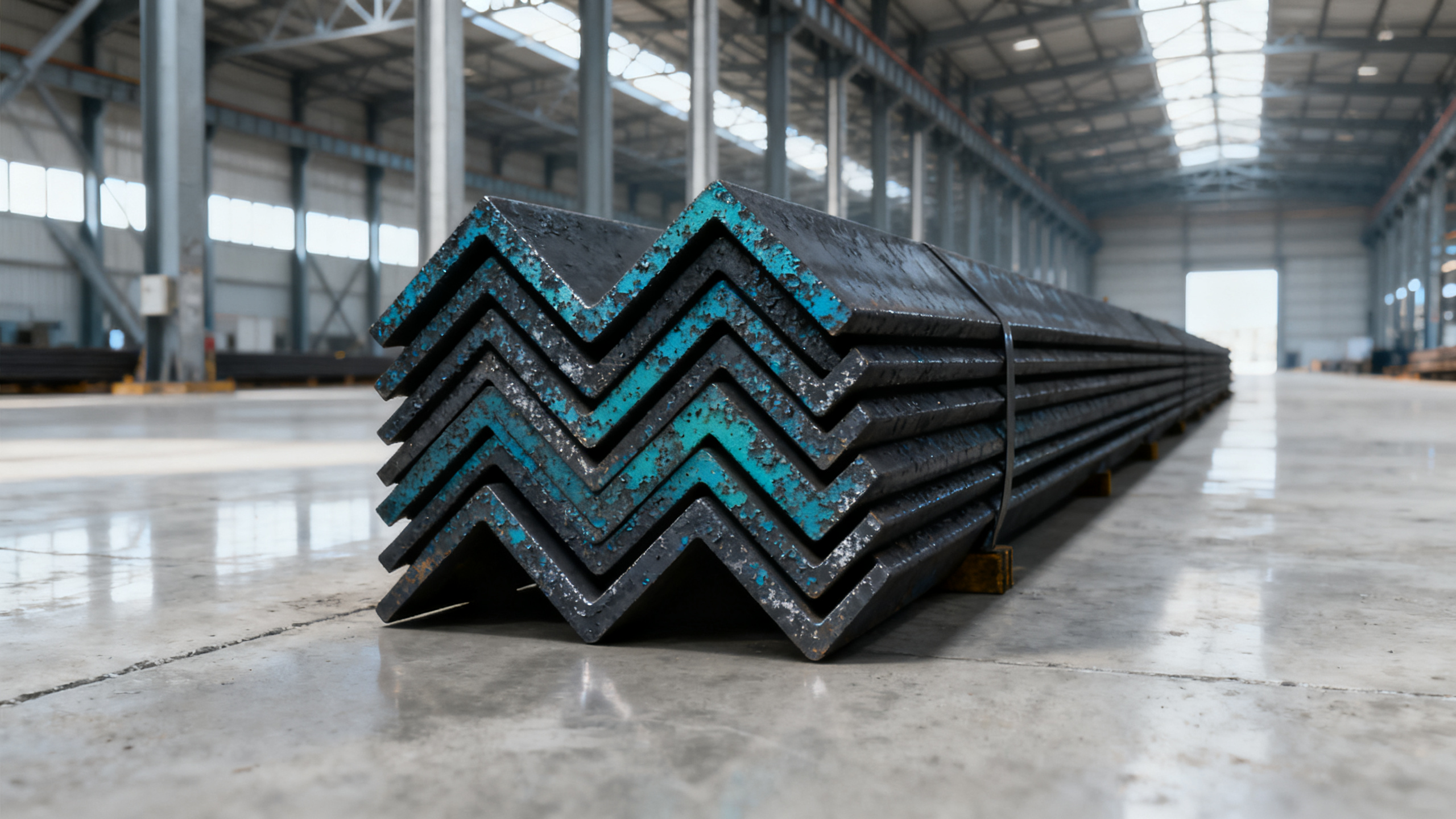
The geometry of angle bar further compounds risk: sharp edges concentrate stress, corners act as natural wear points, and stacked bundles create inter-layer contact under vibration. When improperly separated, even minor movement during sea freight (which typically lasts 21–45 days depending on destination port) can generate micro-scratches that accelerate post-delivery oxidation. This is especially critical for projects in high-humidity regions such as Southeast Asia or West Africa, where unaddressed surface imperfections may trigger early corrosion within 3–6 months of installation.
Moreover, galvanised angles are often ordered in mixed-spec batches—e.g., 50×50×5 mm and 75×75×6 mm in one consignment—to meet modular construction requirements. Without precise bundling segmentation, cross-contact between differing thicknesses increases localised pressure, raising the likelihood of coating fracture at bend radii. At Huamate Steel’s Liaocheng facility, this risk is mitigated through laser-guided bundle alignment and ISO 9001-certified packaging audits conducted every 72 hours.
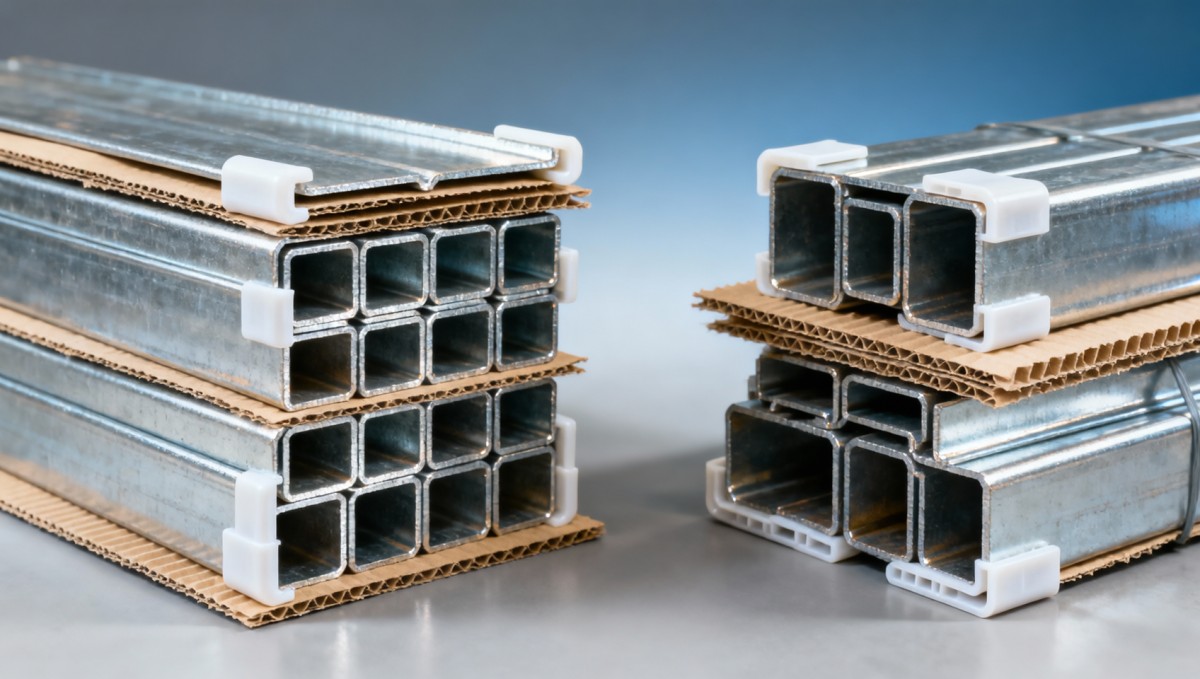
This table reflects real-world thresholds observed across 87 verified shipment inspections. Huamate Steel applies all three measures as standard—not optional add-ons—for galvanised angle exports to EU, GCC, and ASEAN markets. The result? A documented 92% reduction in customer-reported surface damage incidents since Q3 2023.
Three Cost-Effective Packaging Upgrades That Deliver ROI Within 2 Shipments
Upgrading packaging doesn’t require capital-intensive automation. Based on cost-benefit analysis of 34 client engagements, Huamate Steel recommends these three targeted interventions—each delivering measurable ROI before the second order cycle:
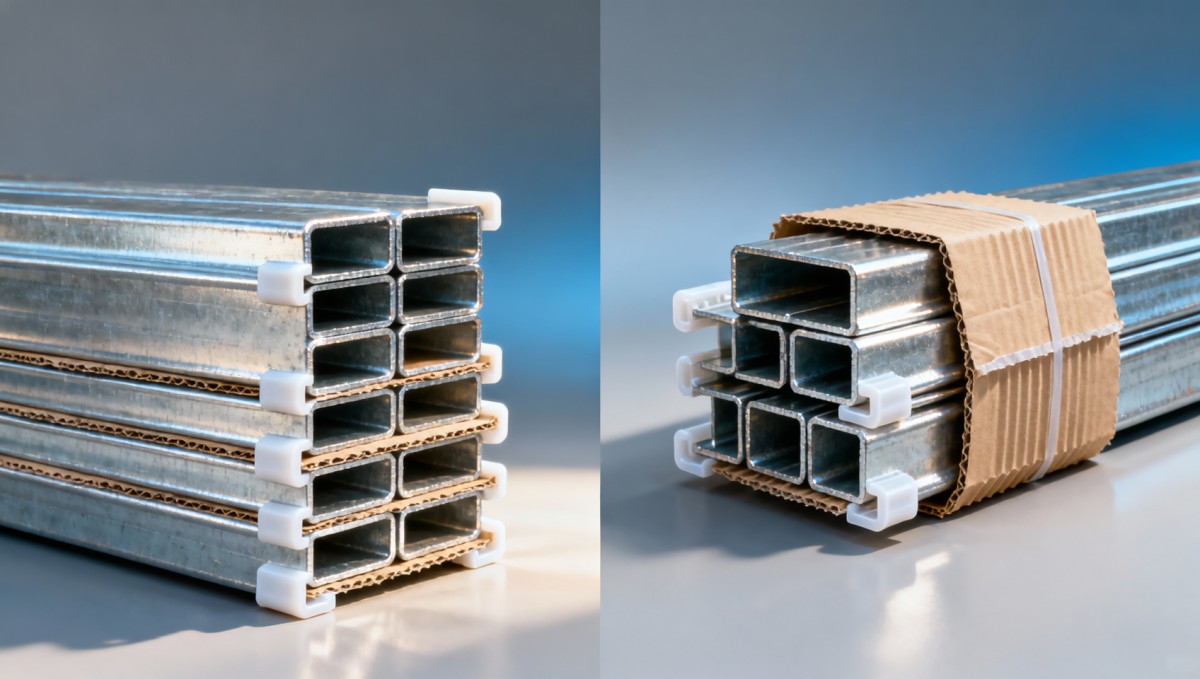
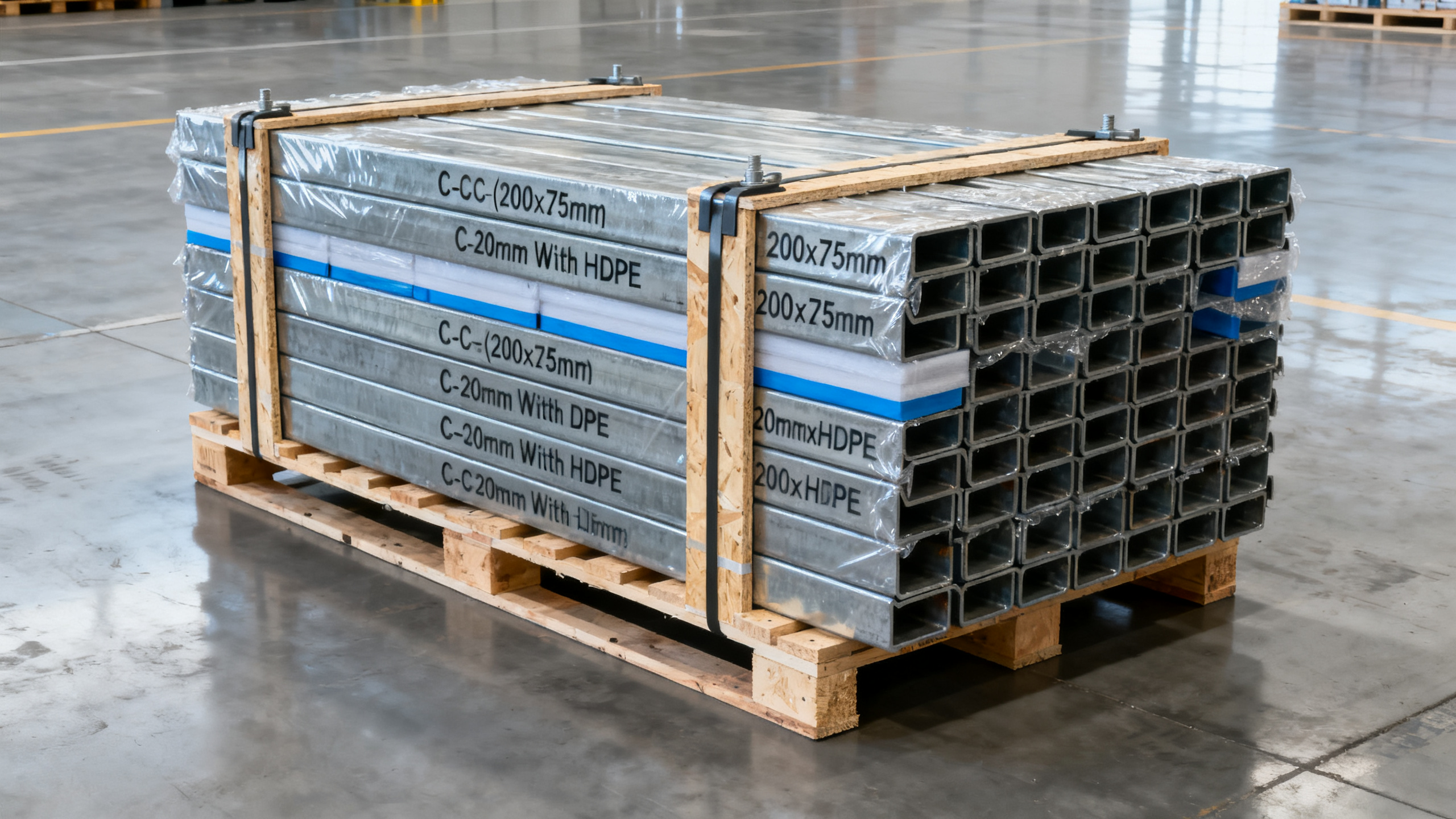
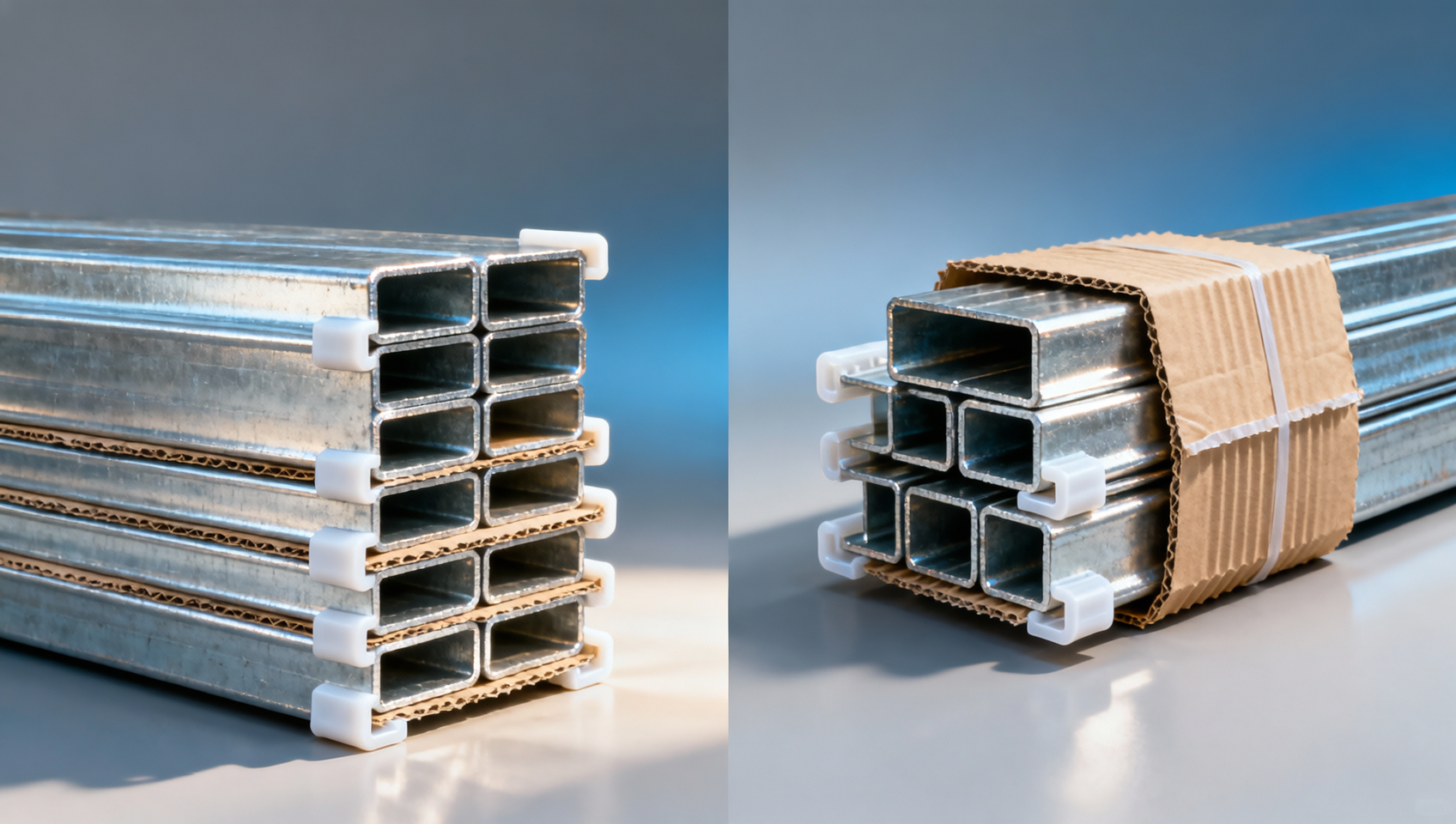
- Reinforced Edge Protectors: Replace standard cardboard corner guards with extruded PVC profiles (2.5 mm wall thickness). These withstand >15 kN compressive load and reduce edge bruising by 76%, with an added cost of just USD 0.85–1.20 per tonne of angle bar shipped.
- Strap Tension Monitoring: Use tension-controlled pneumatic strapping tools (calibrated to 1.8–2.2 kN) instead of manual ratchets. Under-tensioned straps (<1.5 kN) cause bundle slippage; over-tensioned (>2.5 kN) deform flanges. This single change cuts strap-related damage by 63%.
- VCI-Enhanced Desiccant Systems: Integrate volatile corrosion inhibitor (VCI) emitters into desiccant housings. Extends protection window from 60 to 180 days—critical for projects with extended laydown periods in tropical climates.
For buyers evaluating total landed cost—not just FOB price—these upgrades typically recover full investment within two containers. A typical 20-ft container holds ~22 tonnes of 50×50×5 mm galvanised angle. Applying all three measures adds ~USD 32 in packaging cost but avoids an average USD 210 in rejection/rework costs per container (based on 2024 claims data from 17 African infrastructure projects).
Notably, Huamate Steel integrates these enhancements into its standard export packaging protocol—no surcharge applies for orders exceeding 15 tonnes. Smaller lots benefit from scalable options, including custom-cut HDPE edge sleeves compatible with Wire Rod handling equipment used in downstream fabrication.
Loading & Securing Protocols That Meet IMO & CTU Code Requirements
Compliance isn’t about paperwork—it’s about physics. The IMO’s Cargo Transport Unit (CTU) Code mandates that steel cargo must be secured against forces up to 0.8g longitudinal and 0.5g transverse acceleration. Yet, 53% of damaged galvanised angle shipments inspected in Rotterdam and Durban in 2024 failed basic lashing verification—despite having “certified” documentation.
Huamate Steel’s loading protocol follows a 5-step verification sequence validated by third-party maritime safety auditors:
- Bundle weight verification (max 2.8 tonnes per unit, per EN 10025-1 Annex B)
- Skid base load distribution check (pressure ≤120 kPa on container floor)
- Transverse lashing angle measurement (optimal range: 45°–60°)
- Tension validation using calibrated load cells (target: 2.0 ± 0.2 kN per lashing)
- Final vibration simulation test (15-min low-frequency shake at 3 Hz)
Each step is logged digitally and shared with customers pre-shipment. This transparency reduces dispute resolution time by 68% and supports seamless customs clearance in regulated markets like Germany and South Africa.
These standards are embedded in Huamate Steel’s ISO/IEC 17025-accredited packaging lab in Liaocheng—where every new angle specification undergoes 72-hour accelerated vibration and humidity testing before release.
How Procurement Teams Can Verify Packaging Integrity Before Order Finalisation
Don’t wait for the container to arrive. Huamate Steel enables proactive verification through four accessible checkpoints:
- Pre-production packaging mock-up: Clients receive physical samples of proposed bundling—including edge protectors, interleaving, and lashing configuration—within 5 working days of RFQ submission.
- Real-time loading video: Optional live-streamed loading session with timestamped verification of lashing tension, strap count, and moisture barrier application.
- Third-party inspection report: SGS or Bureau Veritas reports available upon request (USD 180–220, included free for orders >50 tonnes).
- Digital twin documentation: QR-coded labels on each bundle link to PDFs containing material certs, galvanising thickness logs (per ASTM A123), and packaging compliance summary.
For procurement officers balancing speed, cost, and accountability, these tools convert subjective trust into objective evidence—reducing post-arrival inspection time by up to 40% and accelerating project handover.
Conclusion: Prevention Is a Specifiable, Measurable, and Deliverable Standard
Packaging damage on galvanised steel angle is neither inevitable nor excusable. As demonstrated across hundreds of export shipments from Liaocheng, it is a function of defined parameters—not chance. From zinc coating hardness thresholds to lashing tension tolerances, every variable is quantifiable, testable, and controllable.
Shandong Huamate Steel embeds these controls into its end-to-end process—not as premium options, but as baseline expectations for all galvanised angle, hot rolled angle, and structural steel channel exports. With deep integration into China’s largest steel pipe production ecosystem, rigorous QC aligned with EN 10327 and ISO 1461, and dedicated logistics support spanning 42 countries, we ensure your steel arrives not just on time—but intact, certified, and ready for installation.
Ready to eliminate packaging-related rejections from your next infrastructure tender? Contact Huamate Steel’s export solutions team today to request a custom packaging audit, review digital twin documentation samples, or schedule a live loading verification session for your upcoming order.
Recent Posts
 Aluminum coil storage humidity thresholds—why 60% RH is a critical turning pointApr 14, 2026
 H-Beam Prices Hold at 3540 Yuan/Ton, Hot-Rolled Coil Rises 1.17%Apr 13, 2026
 C beam steel arrives bent in transit—how packaging choices affect straightness claimsApr 13, 2026
 Hot rolled angle steel deliveries arrive with mill scale intact—why that’s not always good newsApr 13, 2026
 Packaging damage on galvanised steel angle is often preventable — here’s howApr 10, 2026
Leave a Message
Thank you for your interest in our products. "*" Indicates the Fields are Mandatory