
Ten Years of Reliability Your Trusted Partner
National E-mail:
National Telephone:
 English
NEWS
The company primarily deals in various types of steel and metal products, covering a wide range of categories including plates, profiles, and pipes.
When selecting angle bar for outdoor structural applications—whether hot rolled angle, mild steel angle, or galvanised steel angle—longevity is critical. This comparison explores how galvanised steel angle resists corrosion versus painted mild steel angle, factoring in environmental exposure, maintenance needs, and lifecycle cost. As a trusted supplier of angle steel, structural steel channel, and rolled steel angle, Shandong Huamate Steel provides high-quality, ISO-certified products—including competitive mild steel angle price options—to construction, infrastructure, and industrial clients worldwide.
Corrosion Resistance: The Core Differentiator
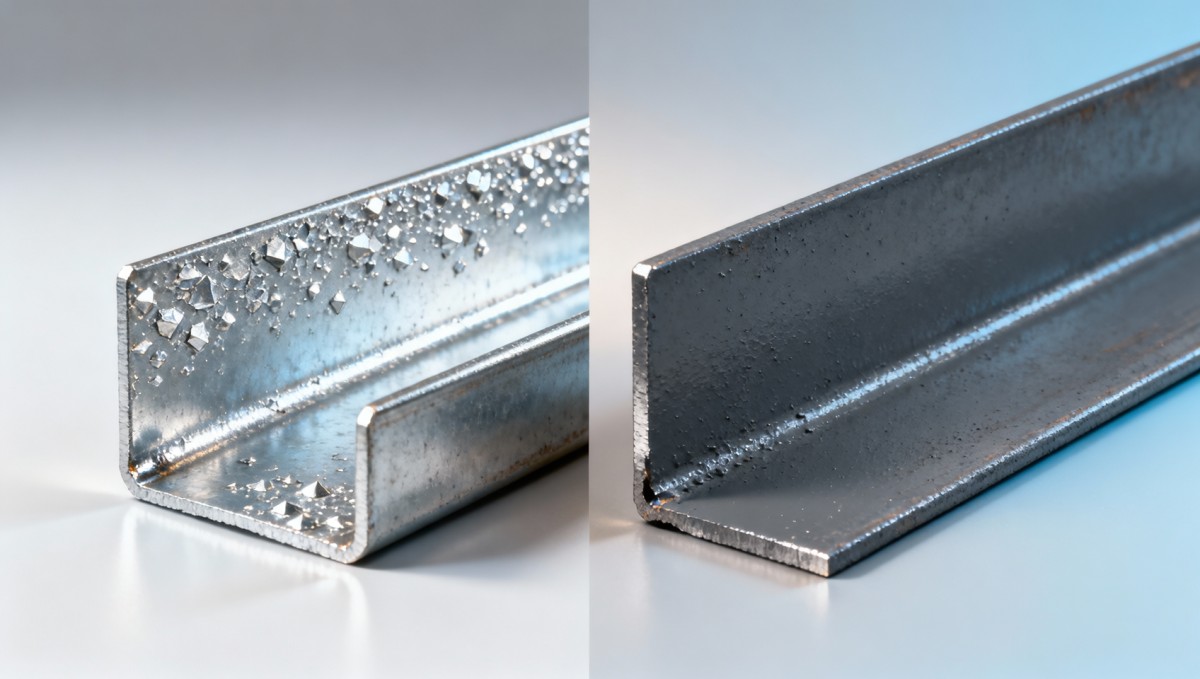
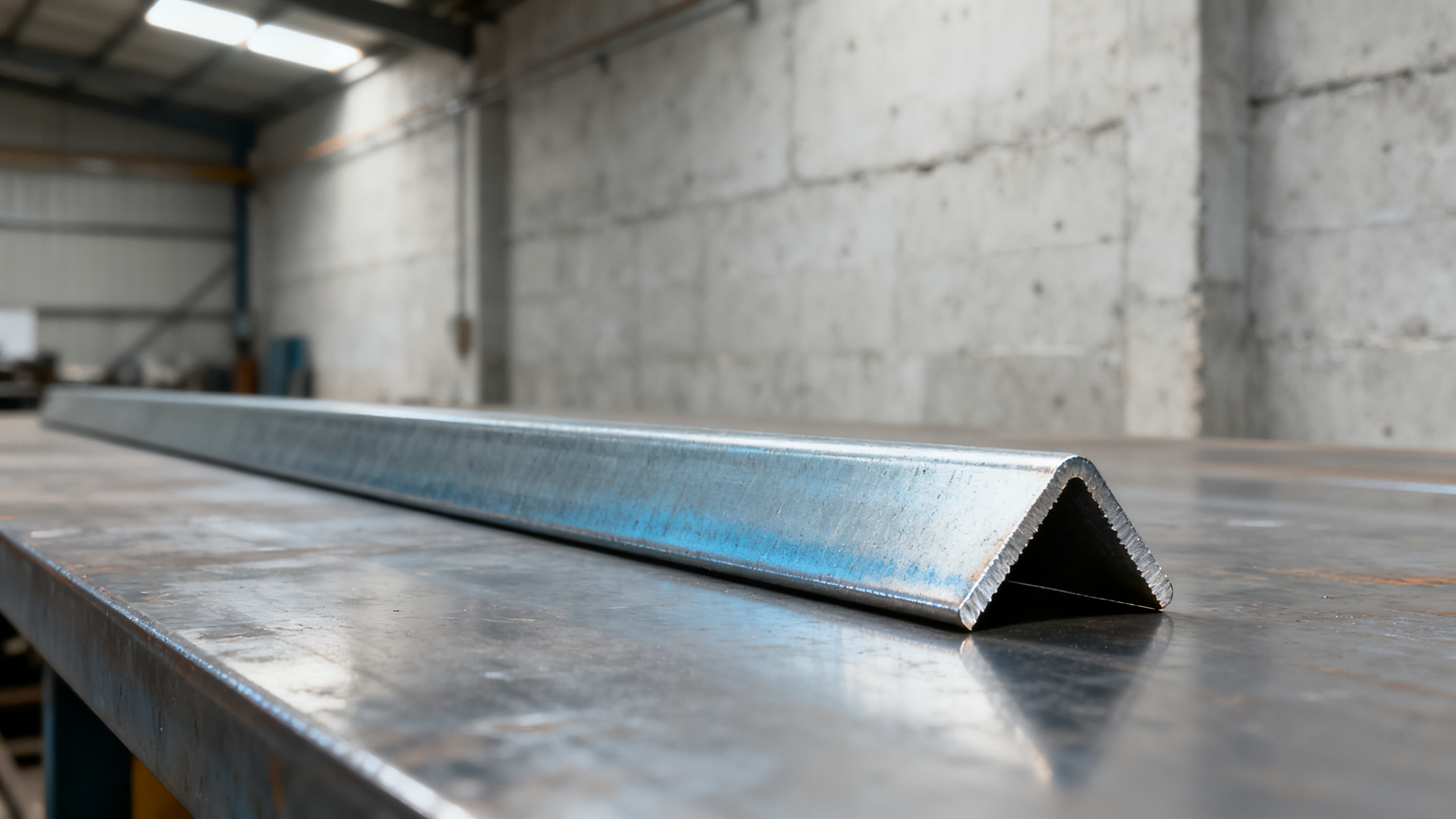
Galvanised steel angle features a metallurgically bonded zinc coating applied via hot-dip galvanising—a process that forms multiple zinc-iron alloy layers over the base mild steel substrate. This coating provides both barrier protection and cathodic protection, meaning even if scratched, exposed steel remains electrochemically shielded. In contrast, painted mild steel angle relies solely on an organic film (e.g., epoxy or polyurethane) to isolate steel from moisture and oxygen. Once the paint film is compromised—by UV degradation, abrasion, or thermal cycling—corrosion initiates rapidly at the breach point.
Accelerated salt-spray testing (ASTM B117) shows galvanised angles typically withstand 500–1,000 hours before red rust appears, whereas standard painted mild steel angles show rust within 100–300 hours under identical conditions. Real-world field data from coastal infrastructure projects in Southeast Asia indicates galvanised angles retain structural integrity for 25–35 years with zero maintenance, while painted equivalents require full recoating every 3–5 years—and often fail prematurely due to poor surface preparation or application inconsistencies.
Shandong Huamate Steel’s galvanised steel angles comply with ASTM A123/A123M and ISO 1461 standards, ensuring minimum average coating thicknesses of 85 µm on sections ≥6 mm thick. All batches undergo rigorous adhesion and uniformity testing before dispatch.
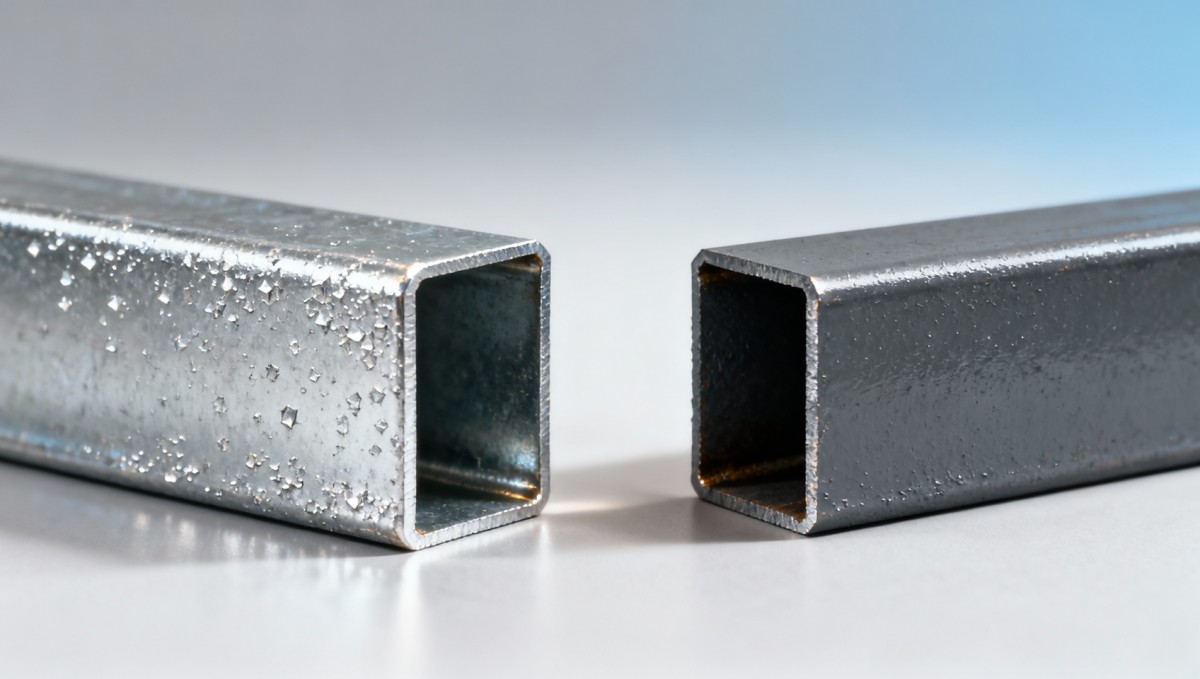
This table highlights why galvanised steel angle delivers superior long-term reliability in aggressive environments. While painted alternatives may appear cost-effective upfront, their lifecycle cost escalates significantly when labour, scaffolding, downtime, and material replacement are factored in—especially across large-scale infrastructure projects.
Lifecycle Cost Analysis: Beyond the Initial Quote
Procurement decisions must account for total cost of ownership (TCO), not just per-tonne price. For a typical 50×50×5 mm L-angle used in transmission tower bracing (10 km project), galvanised steel incurs ~18–22% higher initial material cost versus painted mild steel. However, over a 25-year horizon, painted systems incur 3–4 full recoating cycles—each requiring surface blasting (ISO Sa 2.5), primer application, topcoat, and QA inspection. Labour alone accounts for 65–75% of recoating cost, averaging USD 42–58 per m² in ASEAN markets.
A comparative TCO model for a 10,000-tonne outdoor structure shows galvanised angles deliver 32–39% lower 25-year cost than painted alternatives—even after accounting for galvanising surcharges. This advantage widens further in high-humidity, industrial, or marine zones where paint failure rates exceed 40% within Year 3.
Shandong Huamate Steel offers custom quoting with TCO breakdowns—including freight, customs, and local compliance support—for clients evaluating budget vs. durability trade-offs. Our export team has supported over 120 infrastructure tenders across Kenya, Poland, and Vietnam with verified lifecycle data packages.
Application-Specific Suitability & Environmental Factors
Not all outdoor applications demand equal corrosion resistance. Galvanised steel angle is non-negotiable for: marine piers (salt-laden air), chemical plant perimeters (acid rain, SO₂), wastewater treatment structures (H₂S, chlorides), and telecom towers (UV + lightning-induced electrolysis). Painted mild steel may suffice for low-risk inland sites—e.g., agricultural sheds in arid climates—with annual visual inspections and touch-up protocols.
Key environmental thresholds driving selection include: chloride ion concentration >50 mg/m²/day (mandates galvanising), relative humidity >75% for >4,000 hours/year (strongly favours galvanising), and UV exposure >1,800 kWh/m²/year (accelerates paint chalking). Huamate Steel’s technical team provides free environmental risk mapping based on client project coordinates and ISO 9223 corrosion category classification.
For hybrid requirements—e.g., architectural façades needing colour consistency—dual-coated solutions (galvanised + polyester powder coat) offer 40+ year service life. We also supply 410 /420/430 Stainless Steel Coil for ultra-high-corrosion niches like desalination plants or offshore platforms.
Procurement & Quality Assurance Best Practices
To ensure longevity claims translate to site performance, buyers must verify three critical checkpoints: (1) Galvanising compliance to ASTM A123 or EN ISO 1461—not just “zinc-coated”; (2) Mill test reports confirming base steel grade (e.g., Q235B, S275JR) and mechanical properties; (3) Third-party inspection (SGS/BV) for coating thickness, adhesion, and appearance.
Huamate Steel embeds these safeguards into its export workflow: all galvanised angles undergo 100% ultrasonic thickness scanning; coating weight is validated per ASTM A90; and documentation includes traceable heat numbers, galvaniser certification, and batch-specific corrosion test summaries. Lead time for certified galvanised angle orders is 12–18 days ex-factory—versus 7–10 days for unpainted stock.
- Require mill test reports (MTRs) with tensile strength, yield point, and elongation values
- Specify minimum coating thickness per ASTM A123 Table 1 (e.g., ≥85 µm for 6–12 mm thickness)
- Confirm galvaniser holds valid ISO 9001 and ISO 14001 certifications
- Audit packaging—galvanised angles must be separated by non-metallic spacers to prevent wet storage stain
Conclusion: Prioritise Durability Without Compromising Value
Galvanised steel angle demonstrably outperforms painted mild steel angle in outdoor longevity—delivering 3–7× longer service life, eliminating recurring maintenance, and reducing 25-year TCO by over one-third. Its superiority is rooted in science (cathodic protection), proven by decades of global infrastructure deployment, and reinforced by stringent international standards.
As a professional steel trading enterprise based in Liaocheng—the heart of China’s steel pipe production hub—Shandong Huamate Steel combines deep industry integration, ISO-certified quality control, and end-to-end export expertise to deliver reliable, traceable, and competitively priced structural steel solutions. Whether you’re specifying for a solar farm in Spain, a port expansion in Ghana, or a railway viaduct in Kazakhstan, our team provides technical validation, custom logistics, and lifecycle-backed procurement support.
Contact Huamate Steel today for a no-obligation durability assessment, sample certification package, or tailored quote—including comparative analysis of galvanised vs. painted options for your specific project environment and budget parameters.
Recent Posts
 Copper tube for plumbing: Do bend radius limits change with wall thickness—and how often are they overlooked?Apr 14, 2026
 Copper tube manufacturer scrap rate impact on final pricing—and how to verify itApr 14, 2026
 Galvanized corrugated sheet price per square meter—why quotes vary by 18% across suppliersApr 14, 2026
 Stainless steel pipe cost jumps when ordering under 500 kg—what drives the premium?Apr 14, 2026
 1 angle iron isn’t always ‘1 inch’—why nominal size misleads on actual leg thicknessApr 13, 2026
Leave a Message
Thank you for your interest in our products. "*" Indicates the Fields are Mandatory