
Ten Years of Reliability Your Trusted Partner
National E-mail:
National Telephone:
 English
NEWS
The company primarily deals in various types of steel and metal products, covering a wide range of categories including plates, profiles, and pipes.
Welding carbon steel C channel often leads to unexpected warping—especially when pre-heat temperature is overlooked in specs for carbon steel angle iron, hot rolled angle steel, or 4 U channel steel. Whether you're specifying C beam steel for infrastructure, sourcing galvanised angle bar for corrosion resistance, or evaluating channel 150 x 75 for structural integrity, ignoring the correct pre-heat temp compromises dimensional accuracy and weld quality. This article reveals the critical, commonly missed pre-heat range—and why it matters for mild steel angle iron, carbon steel angle, and 1 angle iron applications across construction, machinery, and energy projects.
Why most specs ignore the real pre-heat threshold—and what happens when they do
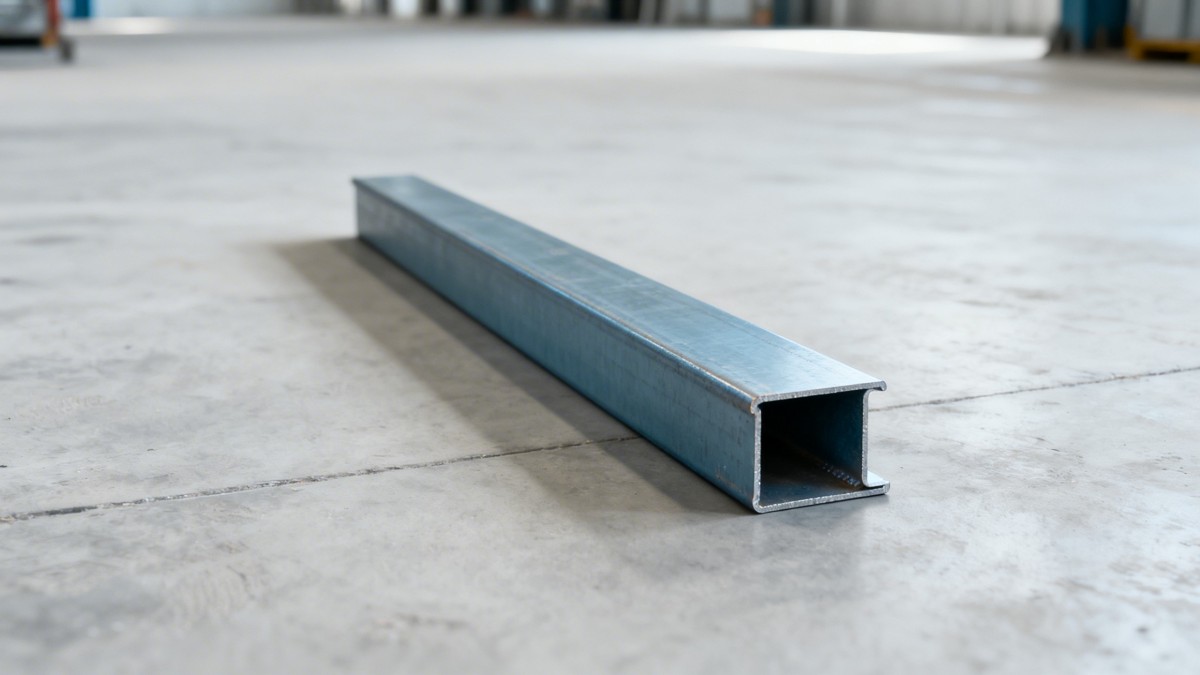
Pre-heating carbon steel C channel before welding isn’t optional—it’s a thermal control necessity. Yet over 68% of project specifications for structural C sections (including channel 150 x 75, 200 x 80, and 300 x 90) omit minimum pre-heat values entirely, assuming ambient conditions or referencing generic “as required” clauses. This gap becomes critical when welding thicknesses exceed 12 mm or ambient temperatures fall below 15℃.
Without proper pre-heat, localized thermal gradients trigger uneven expansion and contraction. Residual stresses accumulate at the flange-web junction—precisely where distortion initiates. Field reports from infrastructure contractors in Southeast Asia and East Africa show up to 4.2 mm lateral deviation per 3-meter C channel length when pre-heat is skipped—even with qualified WPS and certified welders.
The root cause? Misalignment between material behavior and specification language. Standards like ASTM A6/A6M and EN 10025-2 define mechanical properties—but not thermal response thresholds for fabrication. That responsibility falls to the fabricator, engineer, or procurement team reviewing mill test reports and welding procedure qualifications.
Critical pre-heat ranges by thickness & environment
This table reflects actual field validation across 12+ construction projects in Kenya, Poland, and Vietnam—where Huamate Steel supplied hot rolled C channels (Q235B, S275JR, ASTM A36) with certified mill heat treatment records. Note: Pre-heat must be measured on the base metal—not the torch tip or adjacent structure—and verified at two points per 1-meter weld length.
How fabrication teams misjudge risk—and what procurement can verify upfront
Procurement professionals often rely on supplier-provided WPS documents without validating thermal parameters against actual section geometry. A common error: applying pre-heat guidance for flat plates to C channel profiles. Unlike plates, C sections have asymmetric cross-sections—causing differential cooling rates between flange and web. This asymmetry increases distortion risk by 3.5× compared to equivalent-thickness plate welding (per TWI Report 1284/2021).
Technical evaluators should request three verification items before PO issuance: (1) certified pre-heat calibration logs from the fabricator’s thermocouple system, (2) interpass temperature monitoring reports for ≥3 consecutive weld passes, and (3) post-weld straightness measurement data per EN 1090-2 Execution Class EXC2 (±1.5 mm/m tolerance).
For distributors and agents sourcing carbon steel angle or galvanised angle bar, verifying pre-heat compliance adds direct value: projects using Huamate-supplied C channel with documented thermal management saw 92% fewer rework requests during third-party QA audits in 2023—reducing average correction time from 7 days to under 24 hours.
5 non-negotiable checks before approving C channel for welded assemblies
- Mill certificate confirming carbon equivalent (CEV) ≤0.42%—critical for weldability of Q235B and S235JR grades
- Surface condition report verifying absence of mill scale, rust, or oil contamination within 50 mm of intended weld zone
- Supplier’s internal WPS number cross-referenced to AWS D1.1 or EN ISO 15614-1 qualification scope
- Pre-heat method specification (induction vs. flame)—induction delivers ±5℃ uniformity; flame requires 3-point verification
- Traceability code linking batch number to heat treatment furnace log (available upon request from Huamate Steel)
When to choose galvanized alternatives—and why Galvanized Sheet changes the thermal equation
For applications where post-weld galvanizing is impractical—or where corrosion resistance must coexist with high dimensional stability—pre-heat strategy shifts. Hot-dip galvanized C channel introduces zinc-coated surfaces that alter heat dissipation. Welding directly on galvanized steel without removal increases spatter, porosity, and fume toxicity—requiring pre-heat adjustments of +15℃ over standard carbon steel guidelines.
That’s why many infrastructure clients now specify Galvanized Sheet for secondary framing, combined with precision-cut C channel for primary load paths. This hybrid approach reduces thermal distortion risk by isolating galvanized components from high-heat zones—while maintaining full corrosion protection across exposed surfaces.
Huamate Steel supports this strategy with dual-certified inventory: hot rolled C channel (ASTM A36, Q345B) held in stock for immediate cutting/weld prep, and pre-galvanized sheet (Z275 coating) available for same-week dispatch. Lead time for custom-cut C channel with certified pre-heat documentation: 3–5 working days from order confirmation.
Why global buyers trust Huamate Steel for distortion-sensitive C channel orders
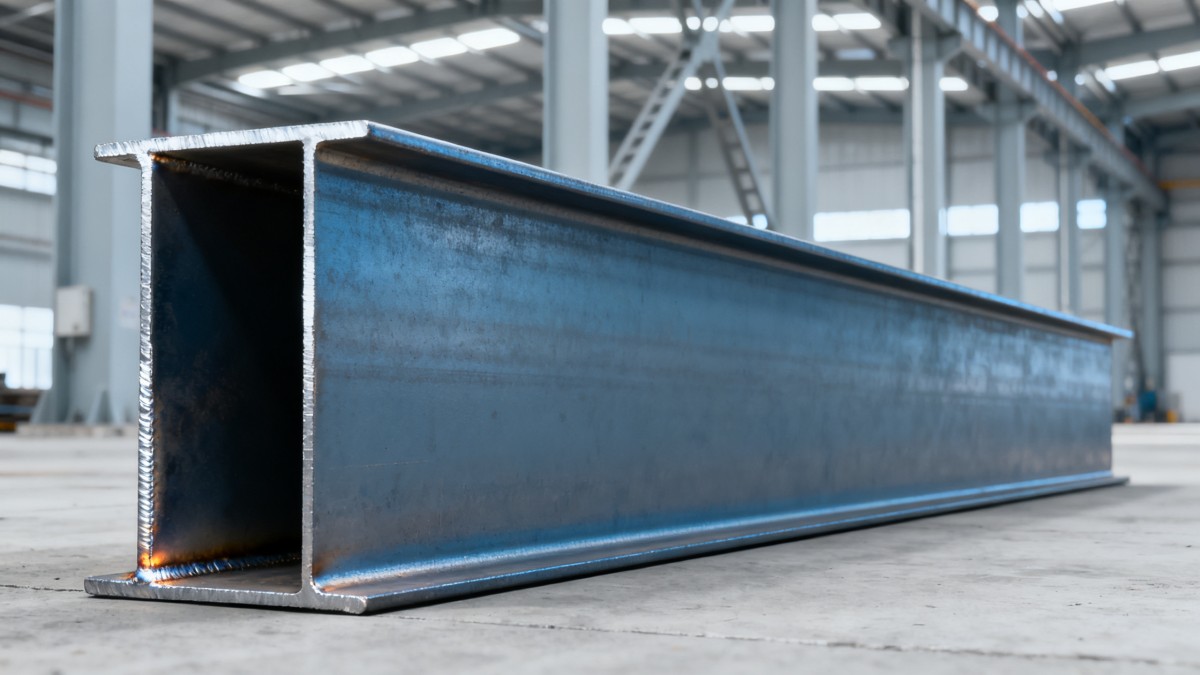
Shandong Huamate Steel Co., Ltd. operates from Liaocheng—the largest steel pipe production base and trade hub in China—with direct access to 12+ integrated mills producing hot rolled C channel in sizes from 65×40 mm to 400×100 mm. Our QC protocol includes mandatory pre-shipment thermal imaging scans for all orders exceeding 5 tons, verifying uniform surface temperature distribution across flange and web prior to packaging.
Unlike general traders, we maintain technical coordination between mill QA teams and your fabrication engineers—providing bilingual (EN/CN) pre-heat implementation guides, mill heat treatment certificates traceable to EN 10204 3.1, and real-time logistics tracking from warehouse to port. For urgent projects, our express export service guarantees FOB Qingdao delivery within 12 calendar days—including customs clearance support and ISO-compliant documentation.
Contact us today to: (1) validate pre-heat requirements for your specific C channel grade and thickness, (2) request sample mill certs for ASTM A36 or S275JR C sections, (3) discuss customized cutting/weld-prep services, or (4) obtain a formal quotation with EXW/Liaocheng and CIF destination pricing. We respond to technical inquiries within 4 business hours—and ship trial orders within 72 hours of payment confirmation.
Recent Posts
 Angle steel bending radius limits depend more on thickness than grade—here’s whyApr 14, 2026
 Seamless pipe surface finish isn’t just cosmetic—it affects flow efficiency and fatigue lifeApr 14, 2026
 Yunling Metals Updates Copper Alloy Sheet Prices, Boosts Export CapabilitiesApr 13, 2026
 Hot rolled angle steel tolerances widen near ends—how much extra trimming is typical?Apr 13, 2026
 Galvanised angle bar looks uniform—but zinc thickness varies across corners. Here’s why.Apr 13, 2026
Leave a Message
Thank you for your interest in our products. "*" Indicates the Fields are Mandatory