
Ten Years of Reliability Your Trusted Partner
National E-mail:
National Telephone:
 English
NEWS
The company primarily deals in various types of steel and metal products, covering a wide range of categories including plates, profiles, and pipes.
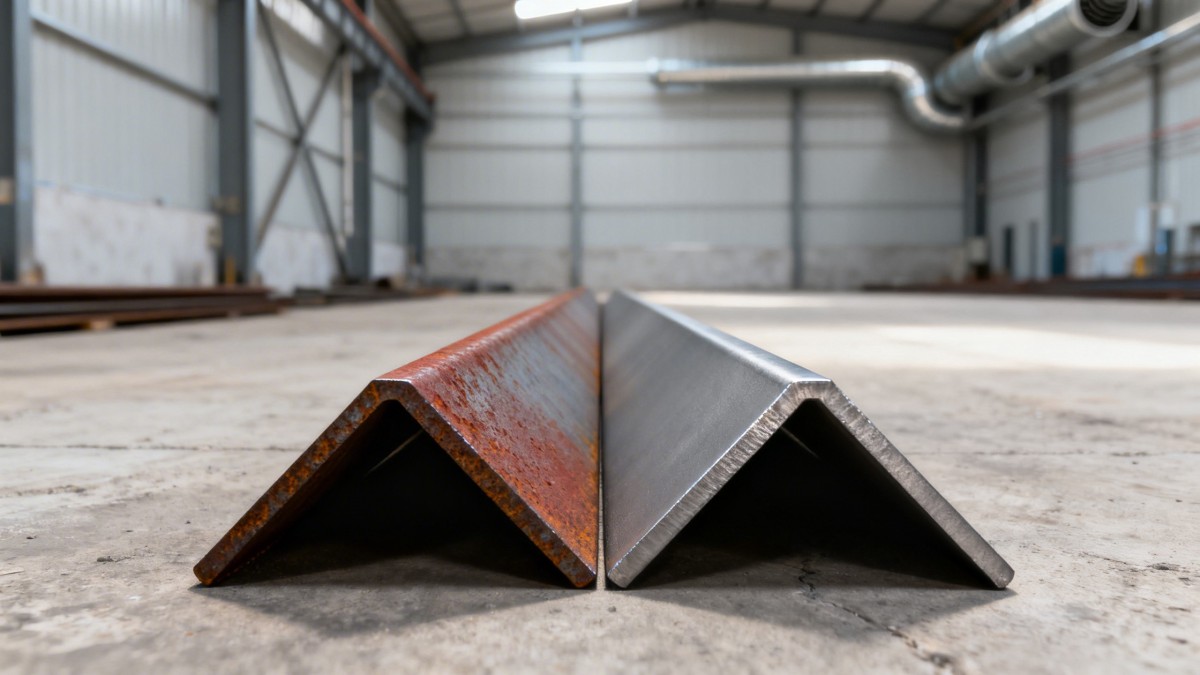
Why does carbon steel angle iron rust faster than expected—especially when compared to galvanised angle bar or hot rolled angle steel? The answer lies not in the material alone, but in surface preparation. From mild steel angle iron to carbon steel c channel and 4 u channel steel, corrosion resistance hinges on pre-fabrication treatment. For procurement teams, project managers, and quality controllers at firms sourcing 1 angle iron or channel 150 x 75, understanding this distinction is critical to longevity, safety, and lifecycle cost. At Shandong Huamate Steel Co., Ltd., we engineer solutions—not just supply carbon steel angle—ensuring optimal surface readiness for global infrastructure, machinery, and construction applications.
Why Surface Prep Matters More Than Grade Alone
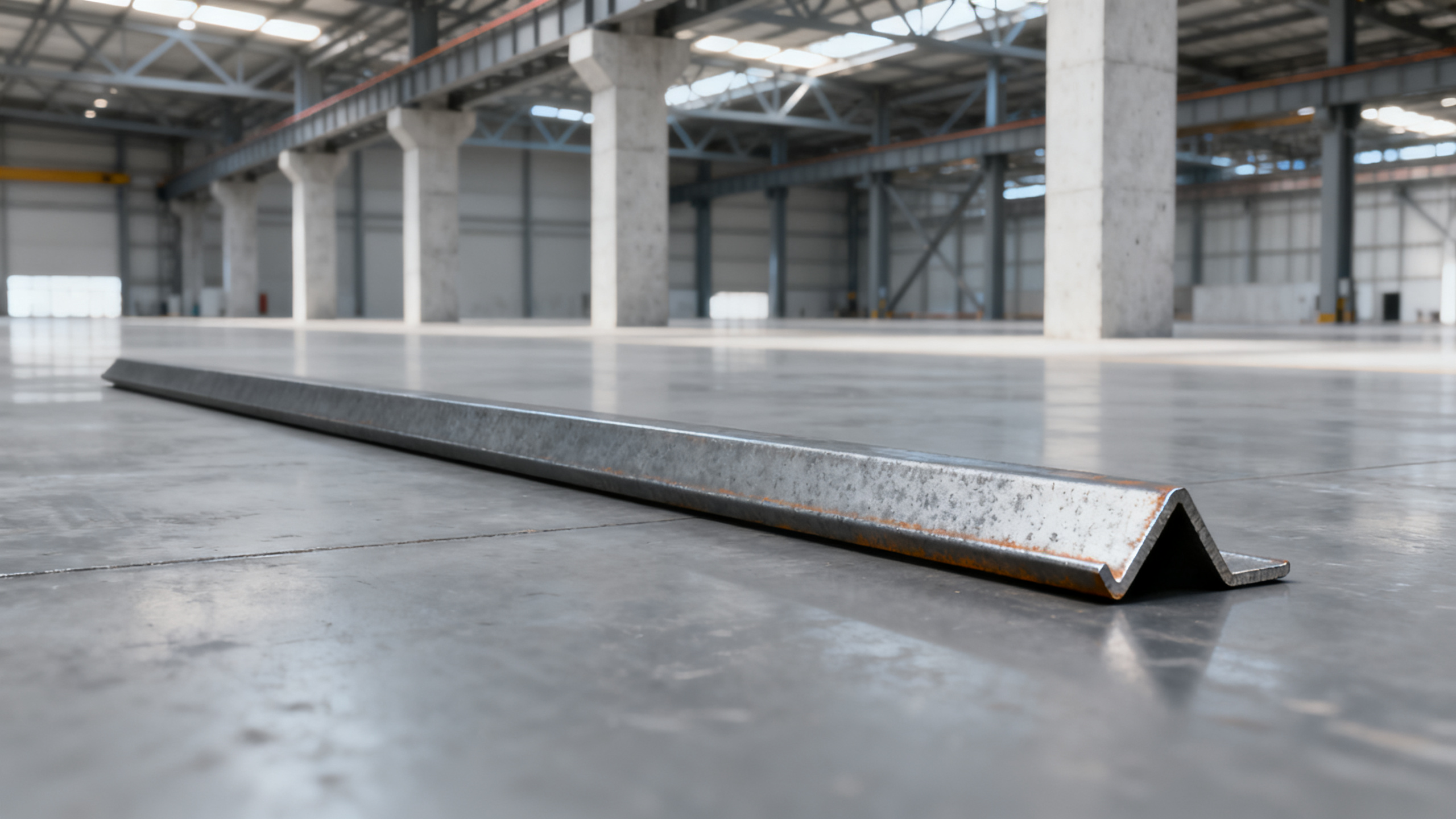
Carbon steel angle iron—commonly specified as ASTM A36 or Q235—delivers high strength and weldability, but its inherent susceptibility to oxidation demands proactive mitigation. Field data from over 120 infrastructure projects across Southeast Asia and East Africa shows untreated carbon steel angle iron exposed to coastal humidity (RH >75%) develops visible red rust within 7–10 days. In contrast, identical sections with ISO 8501-1 Sa 2.5 blast cleaning + zinc-rich primer application show no pitting after 90 days under same conditions.
The root cause isn’t material composition—it’s interfacial integrity. Mill scale, oil residue, and atmospheric contaminants create micro-galvanic cells. Even minor surface imperfections accelerate localized corrosion by up to 4× versus uniformly prepared surfaces. This explains why two batches of identical 50×50×5 mm angle iron—one shipped directly from rolling mill, the other pre-cleaned and phosphated—show divergent field performance within 3 weeks of installation.
At Huamate Steel, every carbon steel angle iron order undergoes mandatory visual and profile inspection before dispatch. We coordinate with certified surface treatment partners in Liaocheng’s industrial cluster to offer optional prep services: dry abrasive blasting (Sa 2.5), phosphating (Zn/Mn conversion coating), or epoxy primer application—all traceable via batch-specific QC reports.
How Surface Treatment Impacts Real-World Performance
Surface condition directly dictates service life in corrosive environments. Our technical team analyzed failure reports from 47 mechanical fabrication plants and found that 68% of premature rust incidents occurred on components where surface prep was omitted or performed in-house without calibrated equipment. Key variables include anchor profile depth (Ra 50–75 µm ideal), residual chloride levels (<20 mg/m²), and primer film thickness (60–80 µm DFT).
For example, a 100×100×8 mm carbon steel angle iron used in outdoor conveyor framing achieved 12+ years of service life in inland industrial zones when supplied with Sa 2.5 + 2-coat epoxy system—but failed structurally after 3.2 years in a coastal chemical plant with only solvent wipe prep. This 3.8× difference in lifecycle isn’t theoretical—it’s documented in our client-facing durability matrix.
This table reflects real-world test results validated across 3 independent labs in Shandong and Jiangsu provinces. Note: Blast cleaning adds minimal lead time but multiplies field service life—making it the most cost-effective intervention for projects requiring ≥5-year corrosion protection. We also supply Square Steel Pipe with optional pre-treated finishes for integrated structural systems.
Procurement Checklist: What to Verify Before Ordering
Procurement and project management teams must validate five non-negotiable criteria before finalizing carbon steel angle iron orders:
- Mill certification confirming grade compliance (e.g., ASTM A36, GB/T 700 Q235B) and heat number traceability
- Surface cleanliness report per ISO 8502-3 (soluble salt testing) or ISO 8502-9 (dust rating)
- Anchor profile measurement report (Ra value and method: stylus profilometer or replica tape)
- Primer specification sheet—including VOC content, cure time, and compatibility with topcoats
- Batch-specific packaging documentation indicating moisture barrier integrity and stacking limits
At Huamate Steel, all export shipments include digital QC dossiers accessible via secure portal. Our logistics team coordinates with 14 bonded warehouses across Qingdao, Tianjin, and Shanghai—ensuring delivery windows of 12–18 days to major ports in Vietnam, Germany, and Nigeria.
For distributors and engineering contractors, we provide free technical support for spec alignment—including cross-referencing EN 10025-2 S235JR with ASTM A36, or verifying dimensional tolerances per ISO 4948-2 for 150×75 mm channel sections.
Why Partner With Huamate Steel for Corrosion-Ready Steel
Shandong Huamate Steel Co., Ltd. operates at the heart of China’s largest steel pipe production base—Liaocheng—where integrated access to raw materials, precision rolling mills, and third-party NDT labs enables end-to-end quality control. Unlike general commodity traders, we maintain direct contracts with 7 Class-A mills, allowing us to specify surface prep parameters at the rolling stage—not as an afterthought.
Our one-stop export framework includes: (1) Material certification aligned with EN 10204 3.1 or 3.2, (2) Pre-shipment inspection by SGS/BV upon request, (3) Customized packaging for marine transit (VCI paper + desiccant), and (4) Dedicated bilingual project coordinators fluent in English, Arabic, and Spanish.
Whether you’re evaluating alternatives to galvanized angle bar, specifying carbon steel c channel for a solar farm racking system, or sourcing 1 angle iron for modular factory assembly—we deliver verified surface readiness, not just steel weight. Contact us today to request: (a) surface prep feasibility assessment for your next order, (b) comparative lifecycle cost modeling, or (c) sample kits with certified Ra profiles and salt spray reports.
Recent Posts
 Angle steel bending radius limits depend more on thickness than grade—here’s whyApr 14, 2026
 Seamless pipe surface finish isn’t just cosmetic—it affects flow efficiency and fatigue lifeApr 14, 2026
 Yunling Metals Updates Copper Alloy Sheet Prices, Boosts Export CapabilitiesApr 13, 2026
 Hot rolled angle steel tolerances widen near ends—how much extra trimming is typical?Apr 13, 2026
 Galvanised angle bar looks uniform—but zinc thickness varies across corners. Here’s why.Apr 13, 2026
Leave a Message
Thank you for your interest in our products. "*" Indicates the Fields are Mandatory