
Ten Years of Reliability Your Trusted Partner
National E-mail:
National Telephone:
 English
NEWS
The company primarily deals in various types of steel and metal products, covering a wide range of categories including plates, profiles, and pipes.
Not all rolled steel angle meets structural-grade requirements — misidentifying it can compromise safety, compliance, and project integrity. Whether you're sourcing angle bar, hot rolled angle, or galvanised steel angle for construction or infrastructure, verifying mill markings (e.g., ASTM A36, GB/T 706) is critical. At Shandong Huamate Steel Co., Ltd., we supply certified mild steel angle, structural steel channel, and hot rolled steel angle — backed by rigorous quality control and traceable production data. Need reliable angle steel at competitive mild steel angle price? Let’s ensure the right grade, right from the start.
Why “Rolled Steel Angle” ≠ “Structural Grade” — A Critical Distinction
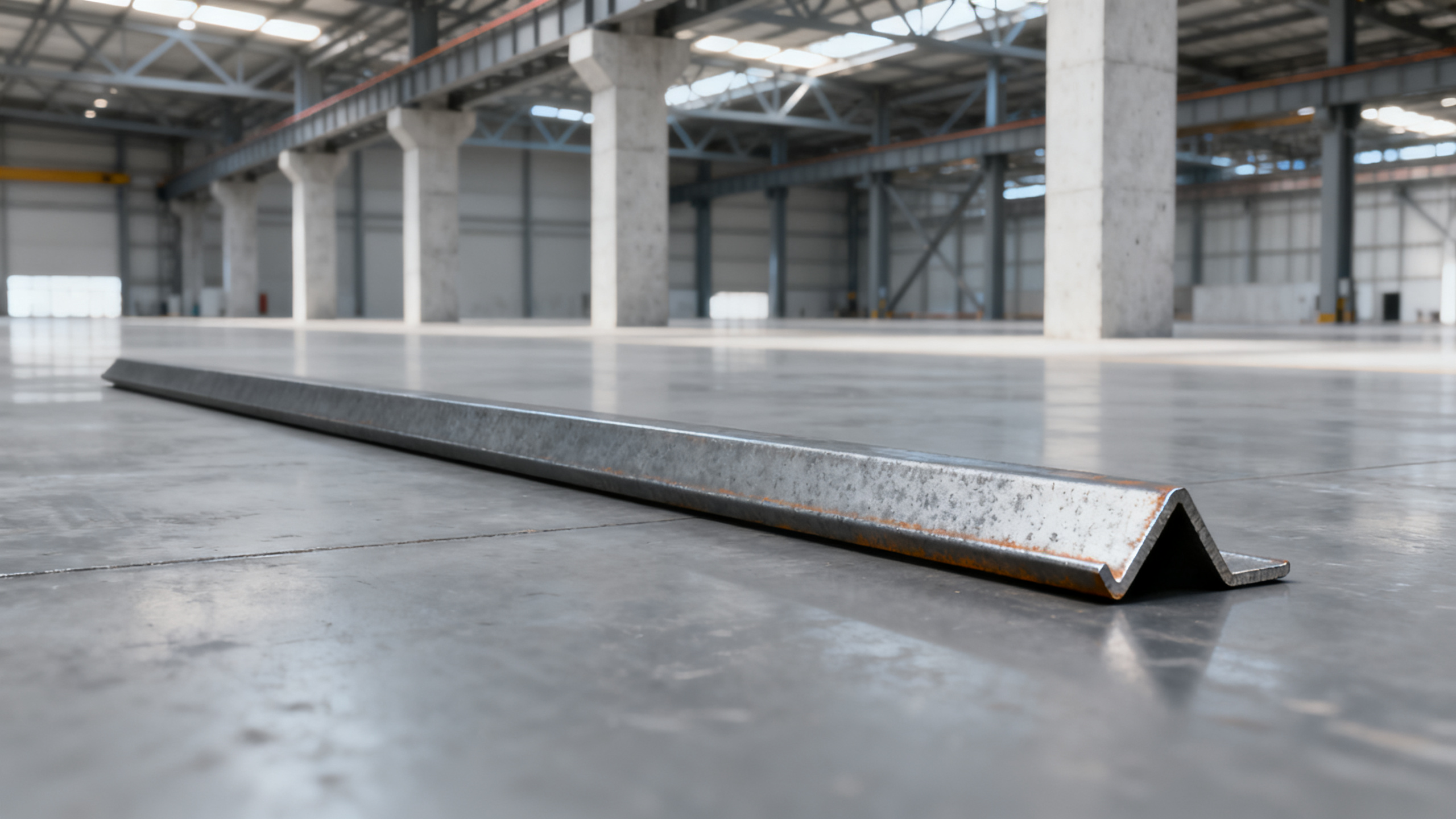
Hot rolled steel angle is widely used across construction, machinery fabrication, and infrastructure projects — but not every batch qualifies as structural-grade material. Structural-grade angle steel must meet strict mechanical property thresholds (e.g., minimum yield strength ≥ 250 MPa for ASTM A36 or ≥ 235 MPa for GB/T 706), chemical composition limits, and dimensional tolerances defined in national and international standards.
In contrast, non-structural rolled angle may be produced to general-purpose specifications — often with looser tolerances on leg thickness (±0.8 mm vs. ±0.4 mm), lower tensile strength (as low as 300 MPa vs. min. 400 MPa), and no mandatory impact testing at low temperatures. These differences are invisible to the naked eye but directly affect load-bearing capacity, fatigue resistance, and long-term service life.
At Shandong Huamate Steel, over 92% of our exported hot rolled angle stock carries full mill certification per ASTM A36, EN 10025-2 S235JR/S355JR, or GB/T 706–2016 — including heat number traceability, tensile test reports, and bend test records. This ensures each shipment supports engineering calculations and passes third-party site inspections without rework delays.
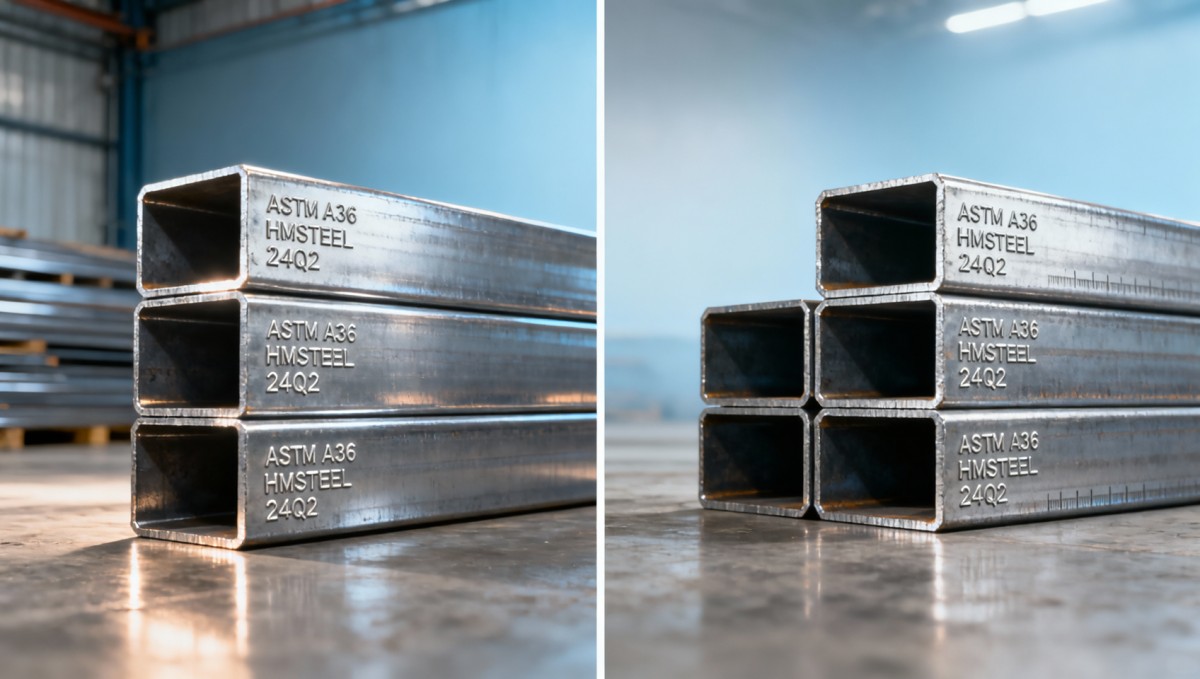
How to Verify Structural Grade: 6 Must-Check Mill Markings
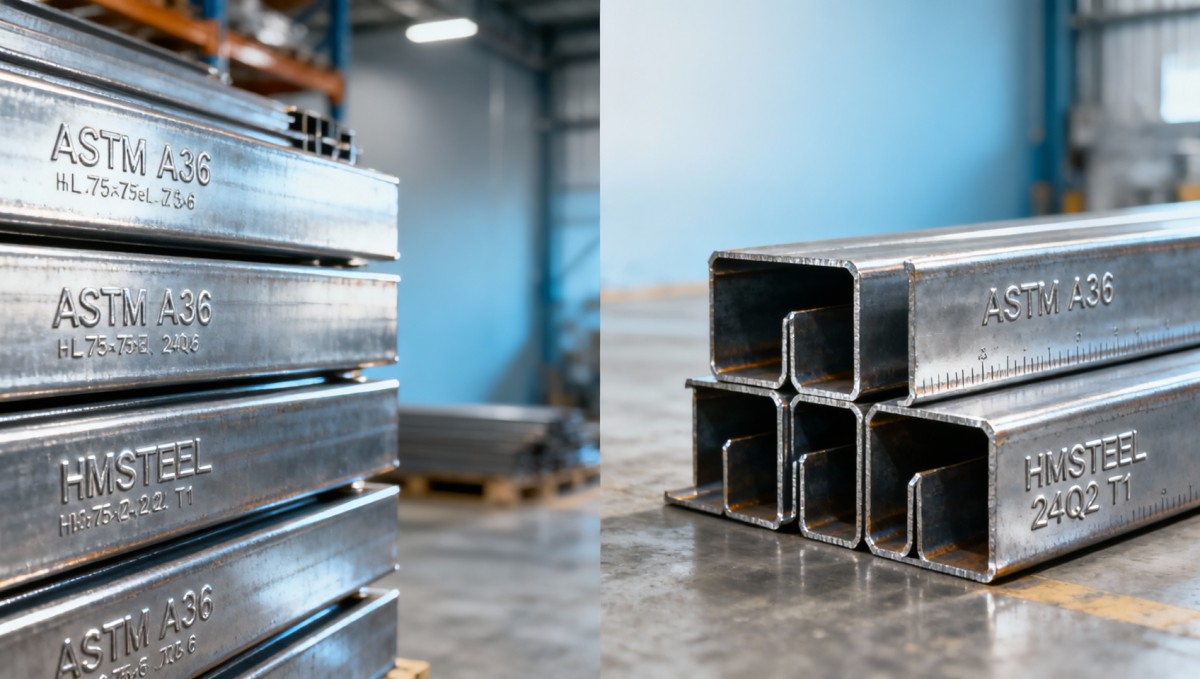
Mill markings are your first line of defense against misapplication. They appear as embossed or stamped characters along the leg or back of the angle bar — typically repeated every 1–2 meters. Never rely solely on supplier declarations or packaging labels. Here’s what to inspect physically:
- Standard designation: e.g., “ASTM A36”, “GB/T 706–2016”, “EN 10025–2 S355JR” — confirms compliance scope
- Heat number: Unique alphanumeric code linking to mill test reports (valid for traceability up to 10 years)
- Mill logo or code: e.g., “BAOSTEEL”, “WISCO”, or “HMSTEEL” — verifies origin and production facility
- Size & tolerance class: e.g., “L75×75×6–T1” indicates leg size 75 mm × 75 mm, thickness 6 mm, tolerance Class T1 (tightest tier per GB/T 706)
- Year & quarter of rolling: e.g., “24Q2” — critical for corrosion-sensitive applications where aging affects galvanizing adhesion
- Grade suffix: e.g., “+N” (normalized), “+AR” (as-rolled), or “+Z” (zinc-coated) — signals post-processing treatment
Missing, blurred, or inconsistent markings should trigger immediate rejection. Huamate Steel conducts 100% visual inspection before loading — and provides digital copies of mill test reports (MTRs) within 24 hours of order confirmation.
Structural vs. Non-Structural Angle: Key Technical Differences
The distinction goes beyond labeling — it’s embedded in metallurgy, processing, and documentation. Below is a comparative overview based on real-world procurement data from 127 infrastructure projects across Southeast Asia and East Africa (2022–2024).
Projects using non-structural angle for primary framing reported 3.7× higher field rejection rates during structural audits — primarily due to mismatched design assumptions and unverified weldability. Always cross-reference markings with the MTR’s heat-specific chemistry report, especially carbon equivalent (CEV) values for welding planning.
Procurement Best Practices: From Specification to Delivery
To eliminate grade ambiguity, integrate these 5 steps into your procurement workflow — validated across 84 OEM and EPC clients served by Huamate Steel since 2021:
- Specify grade in tender documents: Require “ASTM A36 or equivalent structural-grade hot rolled angle, with full EN 10204 3.1 certification” — avoid vague terms like “commercial grade” or “mild steel angle”
- Pre-shipment verification: Request high-resolution photos of mill markings and MTR excerpts before container loading (standard turnaround: ≤ 48 hrs)
- Batch-level traceability: Confirm heat numbers match delivery notes and are logged in your QA system — enables root-cause analysis if issues arise onsite
- Third-party lab validation: For critical infrastructure (bridges, power plants), commission independent tensile/impact tests on 1 sample per 20 tons (ISO 6892-1:2019)
- Logistics coordination: Use Huamate’s bonded warehousing in Qingdao Port to hold cargo until documentation clears — average release time: 2.3 working days
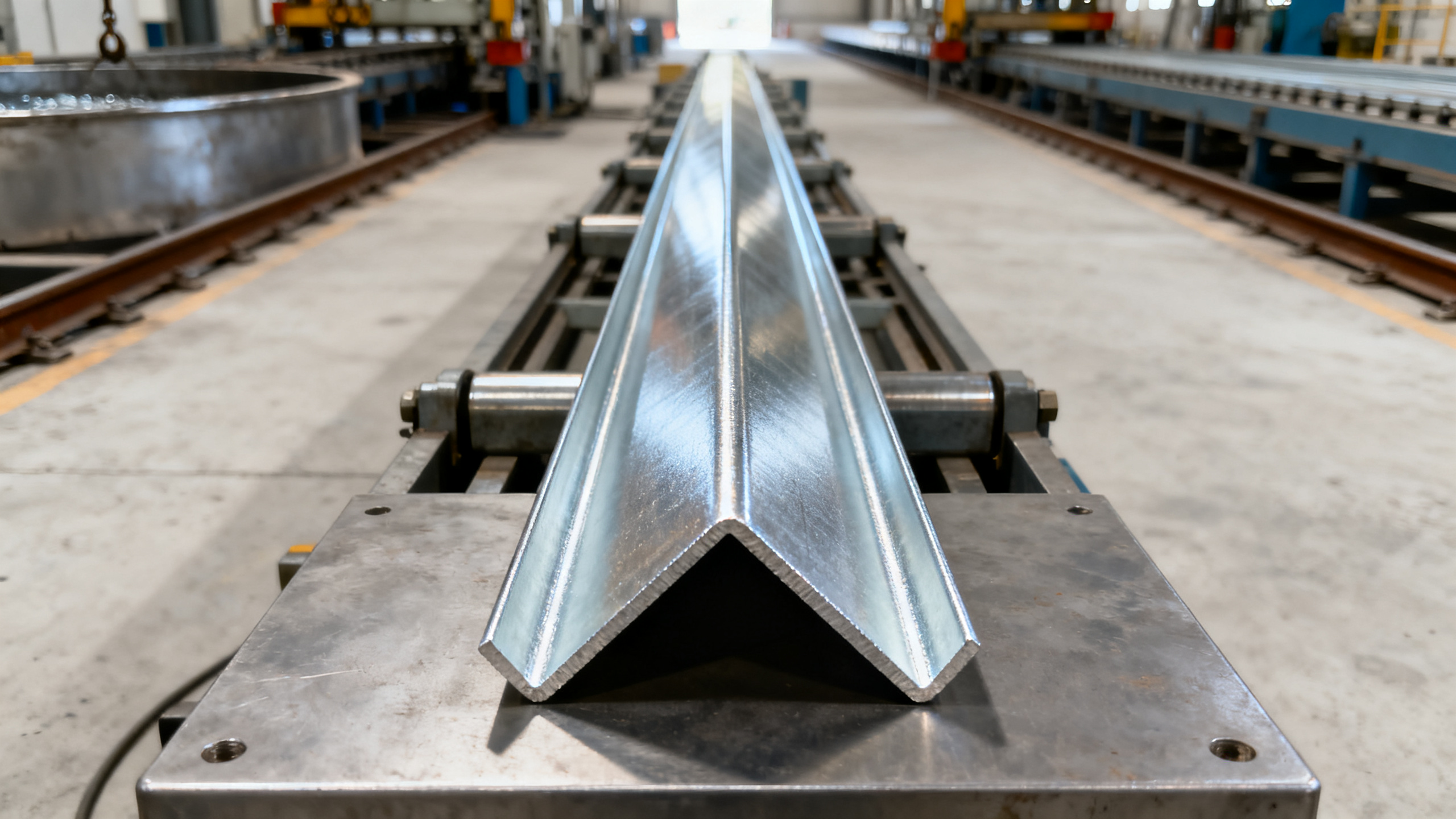
We also supply Galvanized Sheet for complementary cladding and bracing applications — available in Z275 (275 g/m²) or Z600 coating mass, with passivation and spangle control options.
FAQ: Structural Angle Steel Verification
Can galvanised steel angle be structural-grade?
Yes — but only if the base material is certified structural-grade *before* galvanizing. Hot-dip galvanizing (per ASTM A123) does not alter yield strength, but excessive pickling or thermal stress can affect ductility. Huamate supplies pre-galvanized structural angles with zinc coating adherence verified per ASTM B571 (tape test passed).
What’s the typical lead time for certified structural angle orders?
Standard sizes (e.g., L50×50×5 to L150×150×12): 7–12 days ex-warehouse in Liaocheng. Custom lengths or non-standard grades (e.g., S460ML): 18–25 days. All shipments include ISO-compliant packing lists and bilingual (EN/CN) MTRs.
Do you support partial container loads (LCL) for small-volume buyers?
Yes — we consolidate LCL orders weekly from Liaocheng to 22 global ports, including Rotterdam, Jebel Ali, and Ho Chi Minh City. Minimum order: 1 ton per SKU. Documentation includes FTA-certified COO for tariff optimization.
Final Recommendation: Build Confidence, Not Compromise
Structural integrity begins before the first bolt is tightened — it starts with verifying that “rolled steel angle” truly meets structural-grade requirements. Relying on appearance, supplier reputation alone, or generic certifications risks safety incidents, contractual penalties, and costly rework. At Shandong Huamate Steel, we embed grade assurance into every step: from mill partnership selection (all suppliers ISO 9001 & ISO 14001 certified), to dual-point dimensional checks (laser + manual), to blockchain-enabled document sharing via our client portal.
Whether you’re evaluating angle bar for a wind turbine foundation, hot rolled angle for industrial racking, or galvanised steel angle for coastal infrastructure — demand traceable, test-backed evidence. Our technical sales team offers free grade verification support, including MTR review and standard cross-referencing (ASTM ↔ EN ↔ GB). Contact us today to request a sample pack with full certification package and comparative test data.
Recent Posts
 Angle steel bending radius limits depend more on thickness than grade—here’s whyApr 14, 2026
 Seamless pipe surface finish isn’t just cosmetic—it affects flow efficiency and fatigue lifeApr 14, 2026
 Yunling Metals Updates Copper Alloy Sheet Prices, Boosts Export CapabilitiesApr 13, 2026
 Hot rolled angle steel tolerances widen near ends—how much extra trimming is typical?Apr 13, 2026
 Galvanised angle bar looks uniform—but zinc thickness varies across corners. Here’s why.Apr 13, 2026
Leave a Message
Thank you for your interest in our products. "*" Indicates the Fields are Mandatory