
Ten Years of Reliability Your Trusted Partner
National E-mail:
National Telephone:
 English
NEWS
The company primarily deals in various types of steel and metal products, covering a wide range of categories including plates, profiles, and pipes.
Understanding copper tube thermal expansion rates is critical for engineers and procurement professionals selecting materials like copper tube, stainless steel pipe, or seamless pipe—especially when integrating with structural components such as angle bar, H-beam steel, or mild steel angle. At Shandong Huamate Steel Co., Ltd., we support global projects with precision-specified metal products—from aluminum coil to steel rebar—ensuring thermal compatibility across annealed vs. hard-drawn copper tube states. This article details how material condition directly impacts dimensional stability in HVAC, plumbing, and infrastructure applications.
Why Copper Tube Expansion Behavior Varies by Temper Condition
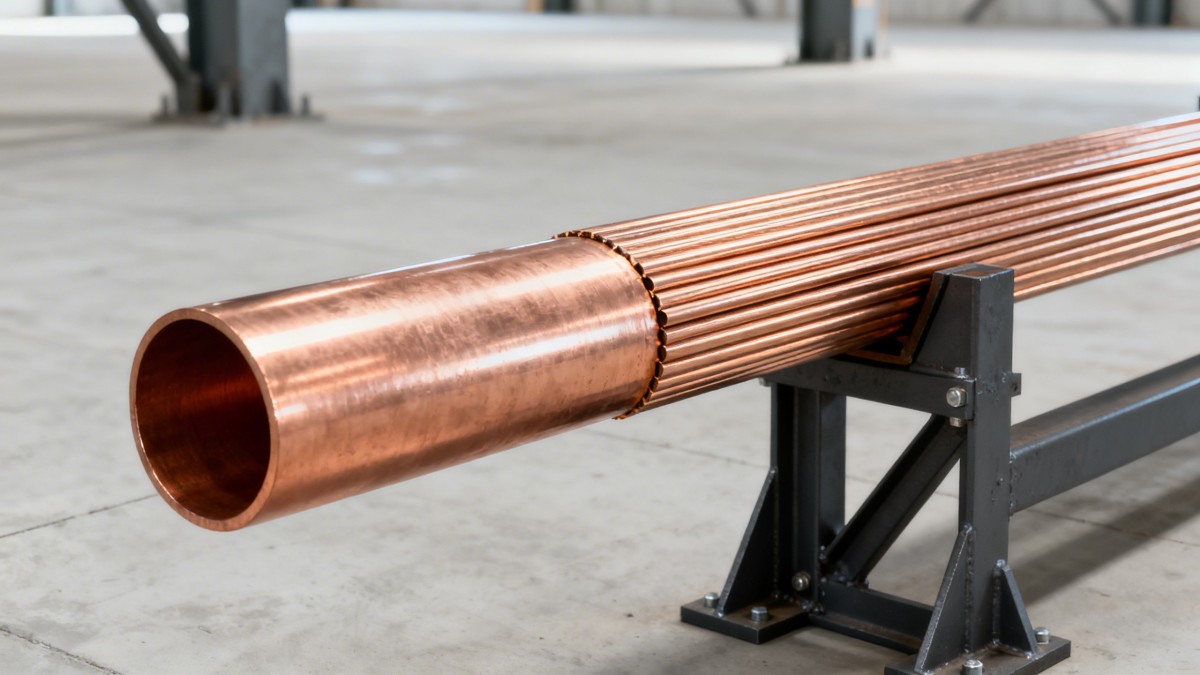
Copper tube thermal expansion rates are not fixed values—they shift measurably based on metallurgical state. Annealed copper (soft, fully recrystallized) exhibits higher coefficient of linear expansion (CLTE) than hard-drawn (cold-worked) copper due to differences in grain structure, dislocation density, and internal stress distribution. This variation—typically 0.0000168/°C vs. 0.0000163/°C over 20–100°C—may seem marginal, but accumulates to ±0.8 mm per meter at ΔT = 50°C. In large-scale piping runs or rigidly anchored systems, such deviations risk joint fatigue, gasket extrusion, or buckling.
The root cause lies in work hardening: cold drawing increases yield strength by ~40–60% while reducing ductility and altering lattice strain. These microstructural changes constrain atomic mobility under thermal load, lowering effective CLTE. Annealed tubes retain greater intergranular freedom, allowing more uniform expansion. Designers must therefore treat these two conditions as functionally distinct materials—not just surface finishes.
For international procurement teams, this distinction affects specification compliance. ASTM B88 requires separate tensile property thresholds for annealed (min. 20 ksi UTS) and hard-drawn (min. 40 ksi UTS) copper water tube. Misapplying one condition’s expansion data to the other can invalidate thermal stress calculations—particularly in mixed-material assemblies involving Angle Steel supports or stainless steel flanges.
Thermal Performance Comparison: Annealed vs. Hard-Drawn Copper Tube
Below is a direct comparison of key thermal-mechanical parameters under standard ambient conditions (20°C), referenced to common international standards including ASTM B88, EN 1057, and ISO 1057. All values reflect typical production tolerances from certified mills partnered with Shandong Huamate Steel.
This table confirms that hard-drawn copper offers superior resistance to thermal-induced stress buildup—critical in high-temperature HVAC manifolds or solar thermal loops where sustained ΔT exceeds 50°C. However, its lower expansion rate also means less self-compensation during contraction, increasing risk of cracking at fixed anchor points. Annealed tubes better absorb cyclic expansion/contraction but require more frequent expansion loop spacing—typically every 3–5 meters versus 6–9 meters for hard-drawn equivalents.
Procurement Guidelines for Thermal-Critical Applications
Selecting the correct copper tube temper requires evaluating three interdependent criteria: operating temperature range, anchoring configuration, and system longevity requirements. For example, in district heating networks with peak temperatures of 95°C and rigid concrete embedment, hard-drawn copper reduces long-term creep risk by up to 30% compared to annealed alternatives—verified via 2,000-hour stress-relaxation tests per ISO 6892-2.
Shandong Huamate Steel applies a 5-point verification protocol for all copper tube shipments:
- Mill test reports confirming temper condition (annealed/hard-drawn) and CLTE validation per ASTM E228
- Dimensional inspection of OD/tolerance per EN 1057 Class D (±0.15 mm for 15–22 mm OD)
- Surface finish assessment: matte for annealed, bright for hard-drawn (no oxide discoloration)
- Batch traceability to furnace number and rolling date
- Third-party certification (SGS or Bureau Veritas) for export to EU, GCC, or ASEAN markets
Delivery lead time averages 7–15 days from order confirmation for standard sizes (15–54 mm OD), with expedited options available for urgent infrastructure projects. All copper tubes ship with protective PVC wrapping and moisture-barrier packaging to prevent tarnishing during maritime transit—critical for tropical destinations like Nigeria, Vietnam, or Brazil.
Why Global Projects Choose Huamate Steel for Precision Metal Supply
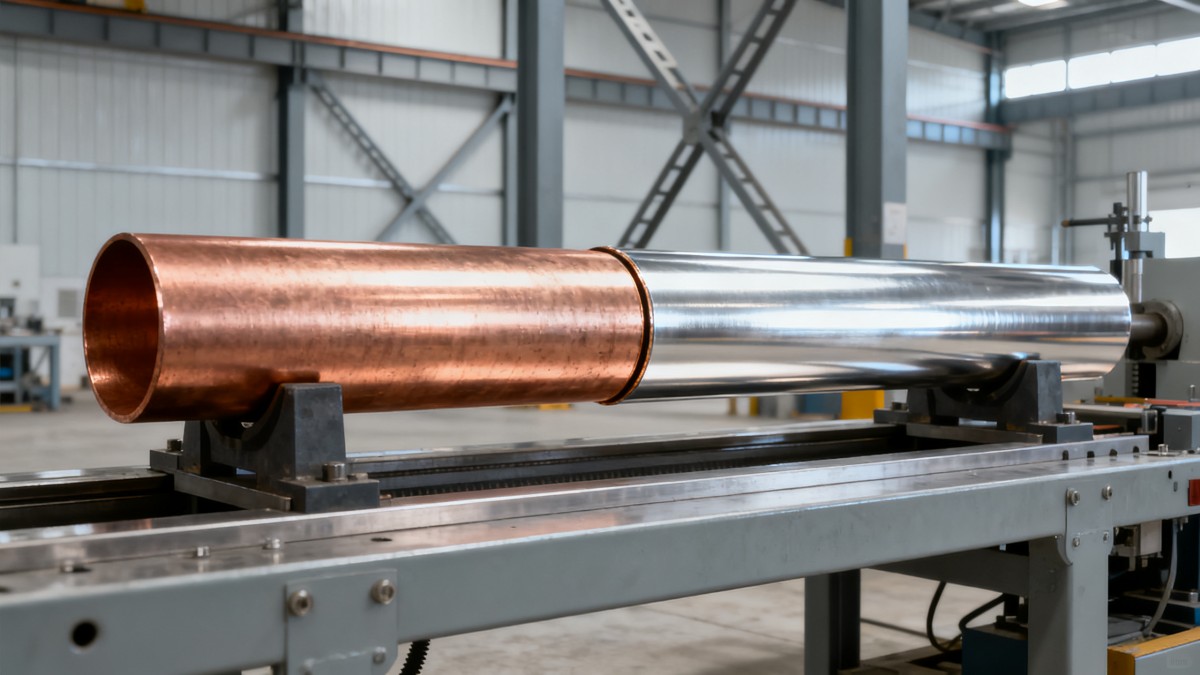
As Liaocheng—the largest steel pipe production base in China—Shandong Huamate Steel leverages an integrated industrial ecosystem spanning raw material sourcing, precision rolling, non-destructive testing, and multimodal logistics. We maintain direct partnerships with 12+ Tier-1 domestic mills certified to ISO 9001, ISO 14001, and OHSAS 18001, ensuring consistent supply of copper tube, stainless steel pipe, seamless pipe, and structural profiles—including Angle Steel used for mechanical support in thermal expansion management systems.
Our foreign trade team handles end-to-end export execution: from technical review of CLTE specifications and pressure rating alignment (e.g., ASME B31.9 vs. EN 13480), to CIF/CNF documentation, customs clearance in destination ports, and post-delivery technical support. Over 86% of our copper tube exports meet dual-standard compliance (ASTM + EN), verified by independent labs prior to shipment.
If your project requires precise thermal expansion data validation, custom temper-specific mill test reports, or integration guidance with structural supports, contact us today. We provide free engineering consultation, sample coordination (lead time: 3–5 working days), and quotation turnaround within 24 hours for standard orders. Let’s ensure dimensional stability starts with the right material choice—and the right partner.
Recent Posts
 Why stainless steel pipe corrosion resistance varies by grade in 2026Apr 14, 2026
 Copper tube thermal expansion rates differ significantly between annealed and hard-drawn statesApr 14, 2026
 Steel rebar yield strength testing often misses real-world bond performanceApr 14, 2026
 Angle bar vs. mild steel angle: Which delivers better weldability for structural framing?Apr 14, 2026
 Jharkhand Steel Plant Blast: 1 Dead, 7 Injured, NHRD Probe LaunchedApr 13, 2026
Leave a Message
Thank you for your interest in our products. "*" Indicates the Fields are Mandatory