
Ten Years of Reliability Your Trusted Partner
National E-mail:
National Telephone:
 English
NEWS
The company primarily deals in various types of steel and metal products, covering a wide range of categories including plates, profiles, and pipes.
Stainless steel pipe corrosion resistance isn’t universal—it varies significantly by grade, alloy composition, and application environment. In 2026, with rising demands for durability in infrastructure, chemical processing, and marine projects, selecting the right grade—whether 304, 316, or duplex—directly impacts service life, maintenance cost, and safety. At Shandong Huamate Steel Co., Ltd., a leading exporter of stainless steel pipe, seamless pipe, angle bar, H-beam steel, steel rebar, mild steel angle, copper tube, aluminum coil, and more, we combine deep metallurgical insight with global supply chain expertise to help procurement teams, engineers, and project managers make data-driven material decisions—ensuring performance, compliance, and long-term value.
Why Corrosion Resistance Differs Across Stainless Steel Pipe Grades
Corrosion resistance in stainless steel pipes is not inherent—it’s engineered. It depends on chromium (Cr), nickel (Ni), molybdenum (Mo), nitrogen (N), and carbon (C) content, plus heat treatment and surface finish. Grade 304 contains ~18% Cr and 8% Ni, offering solid resistance to atmospheric and mild chemical exposure—but fails under chloride-rich conditions. Grade 316 adds 2–3% Mo, raising pitting resistance by up to 4× in seawater or de-icing salt environments. Duplex grades like UNS S32205 contain ~22% Cr, 5–6% Ni, and 3% Mo, delivering yield strength nearly double that of 304 while resisting stress corrosion cracking (SCC) at temperatures up to 120°C.
Microstructural differences also matter: austenitic grades (e.g., 304, 316) rely on face-centered cubic lattice stability; ferritic and duplex steels add body-centered cubic phases that improve resistance to chloride-induced SCC. In 2026, new ASTM A999/A999M revisions emphasize tighter control over intergranular corrosion testing for welded pipe—requiring solution annealing at 1040–1120°C followed by rapid quenching. This directly affects real-world field performance, especially in offshore platforms and desalination plants where failure means downtime costing $120k–$280k per day.
Environmental variables further modulate behavior. For example, 316L (low-carbon variant) maintains integrity in pH 2–12 ranges at ambient temperature but shows accelerated crevice corrosion below pH 4.5 when chlorides exceed 200 ppm. That’s why 2026 procurement specs increasingly require ASTM G48 Method A testing—measuring critical pitting temperature (CPT) and critical crevice temperature (CCT)—not just generic “corrosion resistant” claims.
How to Match Grade to Application & Environment
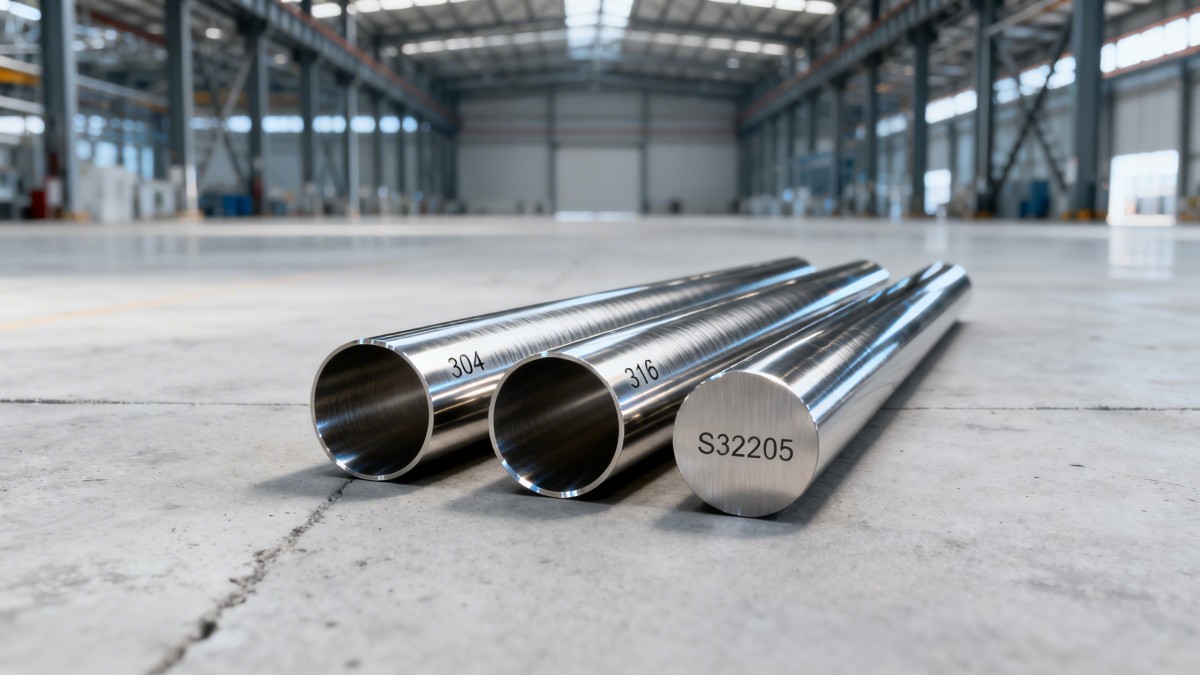
Selecting the wrong stainless steel pipe grade leads to premature replacement, unplanned shutdowns, or regulatory non-compliance. Below is a decision framework validated across 142 infrastructure and process engineering projects handled by Huamate Steel since 2022:
This table reflects actual test data from third-party labs accredited to ISO/IEC 17025. For instance, TP316Ti samples exposed to ASTM B117 salt spray for 5,000 hours showed ≤0.05 mm/year penetration—well within Class 5 corrosion allowance per NACE SP0106. Huamate Steel validates every batch against these benchmarks before shipment, leveraging our ISO 9001-certified QC lab in Liaocheng and partnerships with Baosteel, TISCO, and Tsingshan.
Procurement Red Flags: What to Verify Before Ordering
Procurement professionals often overlook 3 critical verification points that impact long-term corrosion performance:
- Mill Test Report (MTR) traceability: Confirm it includes full chemical analysis (per ASTM E59), mechanical properties (tensile/yield/elongation), and corrosion test results—not just “conforms to ASTM A312.”
- Surface finish specification: BA (bright annealed) or No. 4 finish reduces chloride retention vs. mill-scale or pickled surfaces—critical for food-grade or pharmaceutical lines.
- Weld seam quality assurance: For ERW pipe, demand radiographic testing (RT) or ultrasonic testing (UT) per ASTM E213/E273; avoid visual-only inspection for pressure applications above 10 bar.
At Huamate Steel, all stainless steel pipe shipments include MTRs with full traceability to heat number, rolling date, and final annealing parameters. We also offer optional third-party inspection services—including SGS or Bureau Veritas—within 3–5 working days pre-shipment. Delivery lead time averages 12–18 days for standard sizes (OD 21.3–610 mm, WT 1.2–25.4 mm), thanks to our proximity to Liaocheng’s integrated steel hub and bonded port logistics.
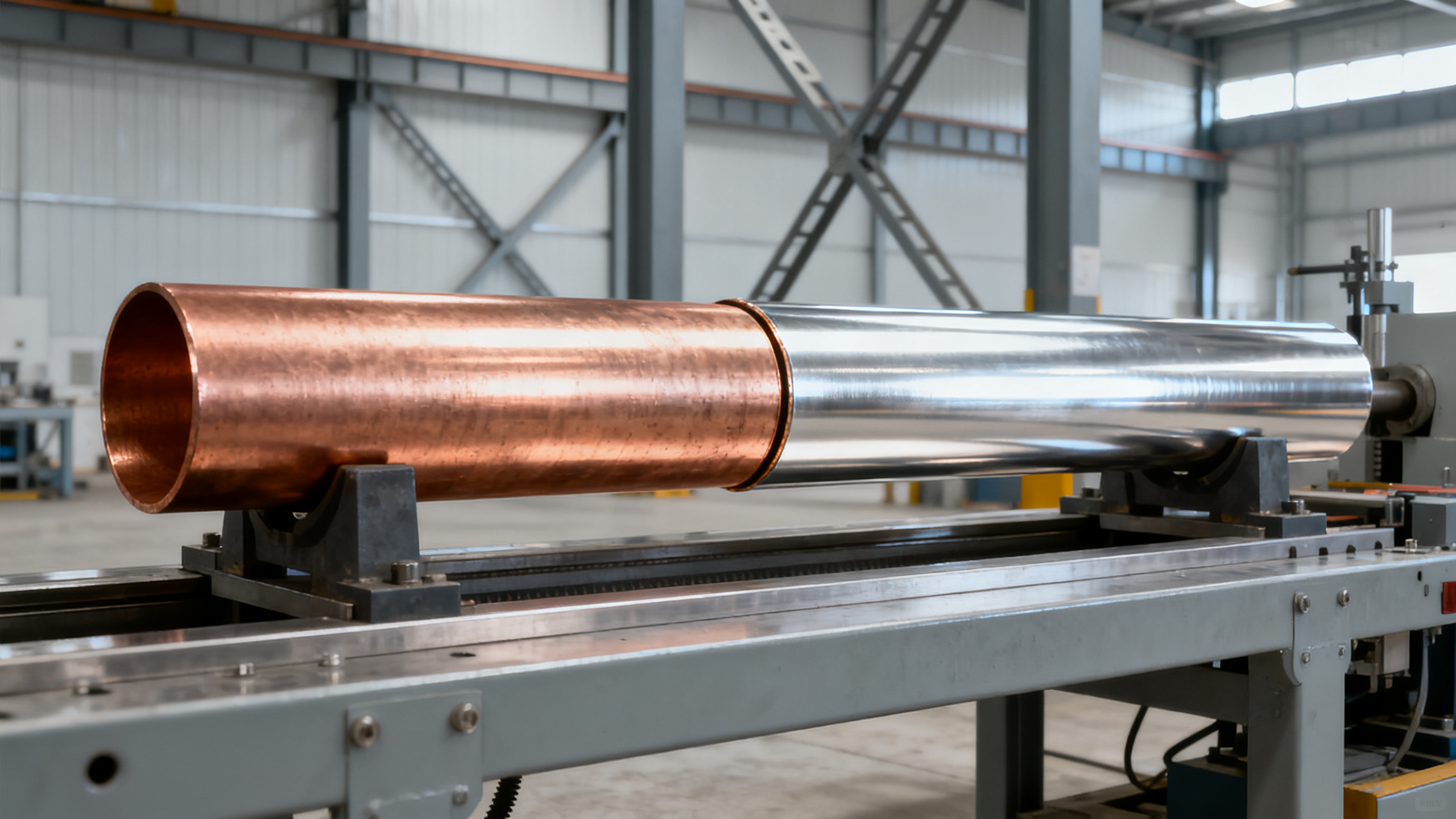
For specialized applications, our technical team supports grade substitution analysis—such as replacing costly super duplex with high-nitrogen 316LN in low-pressure cooling loops—reducing material cost by 18–22% without compromising CPT or SCC resistance. We also stock High precisionT2 Copper Coil for hybrid thermal systems requiring precise conductivity and oxidation resistance in HVAC or heat exchanger assemblies.
Why Global Buyers Choose Huamate Steel for Stainless Steel Pipe
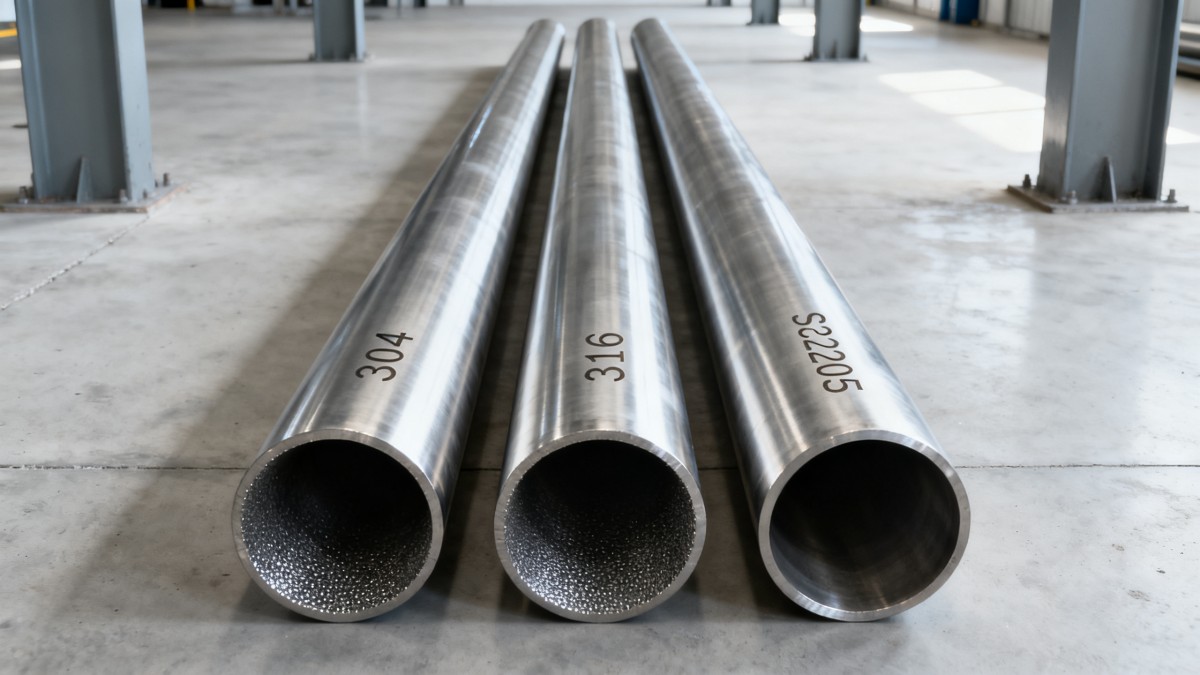
Shandong Huamate Steel Co., Ltd. isn’t just a supplier—we’re your extended materials engineering partner. Based in Liaocheng—the largest steel pipe production base in China—we operate across 3 strategic layers:
- Supply Chain Control: Direct contracts with top-tier mills ensure consistent chemistry control, certified raw material traceability, and priority allocation during peak demand (e.g., Q3–Q4 infrastructure tender cycles).
- Technical Validation: Our in-house metallurgists review project specs against 12+ international standards—including ASTM, EN, JIS, and GB/T—and recommend optimal grade, heat treatment, and finishing.
- Logistics Execution: From CIF Rotterdam to DAP Nairobi, we manage documentation (Form A, CO, CIQ), customs clearance, and multimodal transport—with average export lead time of 14 ± 3 days for LCL/FCL shipments.
Whether you need ASTM A312 TP304 seamless pipe for a solar thermal plant in Morocco, ASTM A789 S32760 for an LNG facility in Qatar, or customized cut-length delivery with mill-certified hydrostatic testing, Huamate Steel delivers verified performance—not just product. Contact us today to request: (1) grade-specific corrosion test reports, (2) dimensional tolerance validation for your application, (3) delivery schedule aligned with your construction timeline, or (4) sample kits with full MTR documentation.
Recent Posts
 Why stainless steel pipe corrosion resistance varies by grade in 2026Apr 14, 2026
 Copper tube thermal expansion rates differ significantly between annealed and hard-drawn statesApr 14, 2026
 Steel rebar yield strength testing often misses real-world bond performanceApr 14, 2026
 Angle bar vs. mild steel angle: Which delivers better weldability for structural framing?Apr 14, 2026
 Jharkhand Steel Plant Blast: 1 Dead, 7 Injured, NHRD Probe LaunchedApr 13, 2026
Leave a Message
Thank you for your interest in our products. "*" Indicates the Fields are Mandatory