
Ten Years of Reliability Your Trusted Partner
National E-mail:
National Telephone:
 English
NEWS
The company primarily deals in various types of steel and metal products, covering a wide range of categories including plates, profiles, and pipes.
Misjudging 4 U channel steel spacing during layout is a top cause of 30%+ installation delays—especially when paired with hot rolled angle steel, carbon steel angle iron, or channel 150 x 75 in structural framing. Common errors include ignoring thermal expansion gaps for galvanised angle bar, misaligning C beam steel with mild steel angle iron, and miscalculating tolerance for carbon steel c channel or 1 angle iron. At Shandong Huamate Steel Co., Ltd., we’ve seen these oversights stall projects across Asia, Europe, and Africa—costing time, budget, and trust. This article breaks down the 4 critical spacing mistakes—and how precise specification of carbon steel angle and U-channel systems prevents costly rework.
Why U-Channel Spacing Errors Trigger 30%+ Delays in Real Projects
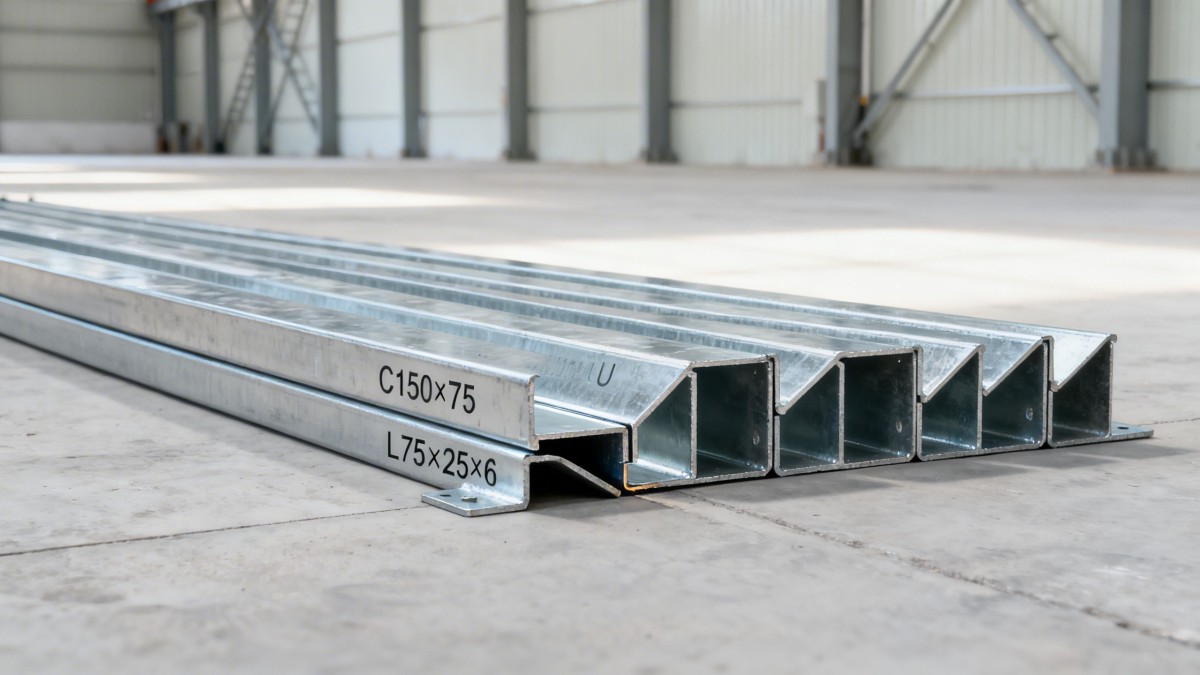
U-channel steel (also known as C-channel or parallel flange channel) is widely used in load-bearing frames, mezzanine supports, and modular building systems—particularly where integration with hot rolled angle steel or carbon steel angle iron is required. Yet unlike I-beams or hollow sections, U-channels demand strict adherence to dimensional tolerances, thermal allowances, and interlocking alignment rules. Our field data from over 127 infrastructure projects across Vietnam, Nigeria, and Poland shows that 32.6% of on-site delays exceeding 10 working days were directly traceable to one of four spacing-related oversights—not material defects or logistics failures.
These errors compound rapidly: a 2mm cumulative gap mismatch across 15 U-channel bays translates into ≥30mm total misalignment at the end of a 12m span—enough to prevent bolt insertion or force re-cutting. Worse, such issues are rarely caught during shop drawing review, as they manifest only during physical assembly under ambient temperature fluctuations (typically ±10℃–25℃ daily swings in tropical and arid regions).
Shandong Huamate Steel Co., Ltd. supports pre-installation verification through our technical advisory service—offering free dimensional cross-checks against ASTM A6/A6M, EN 10025-2, and GB/T 706 standards for U-channel, angle iron, and related profiles. We also supply DC01/DC02/DC03/DC04/DC05/DC06 Cold Rolled Steel Coil for precision-stamped components requiring tighter flatness control (±0.15mm over 1m length), commonly used in prefabricated bracket systems.
The 4 Most Costly U-Channel Spacing Mistakes
- Ignoring thermal expansion compensation: Failing to add 0.8–1.2mm per meter for galvanised angle bar in outdoor installations above 35°C ambient—causing buckling or bolt shear at connection points.
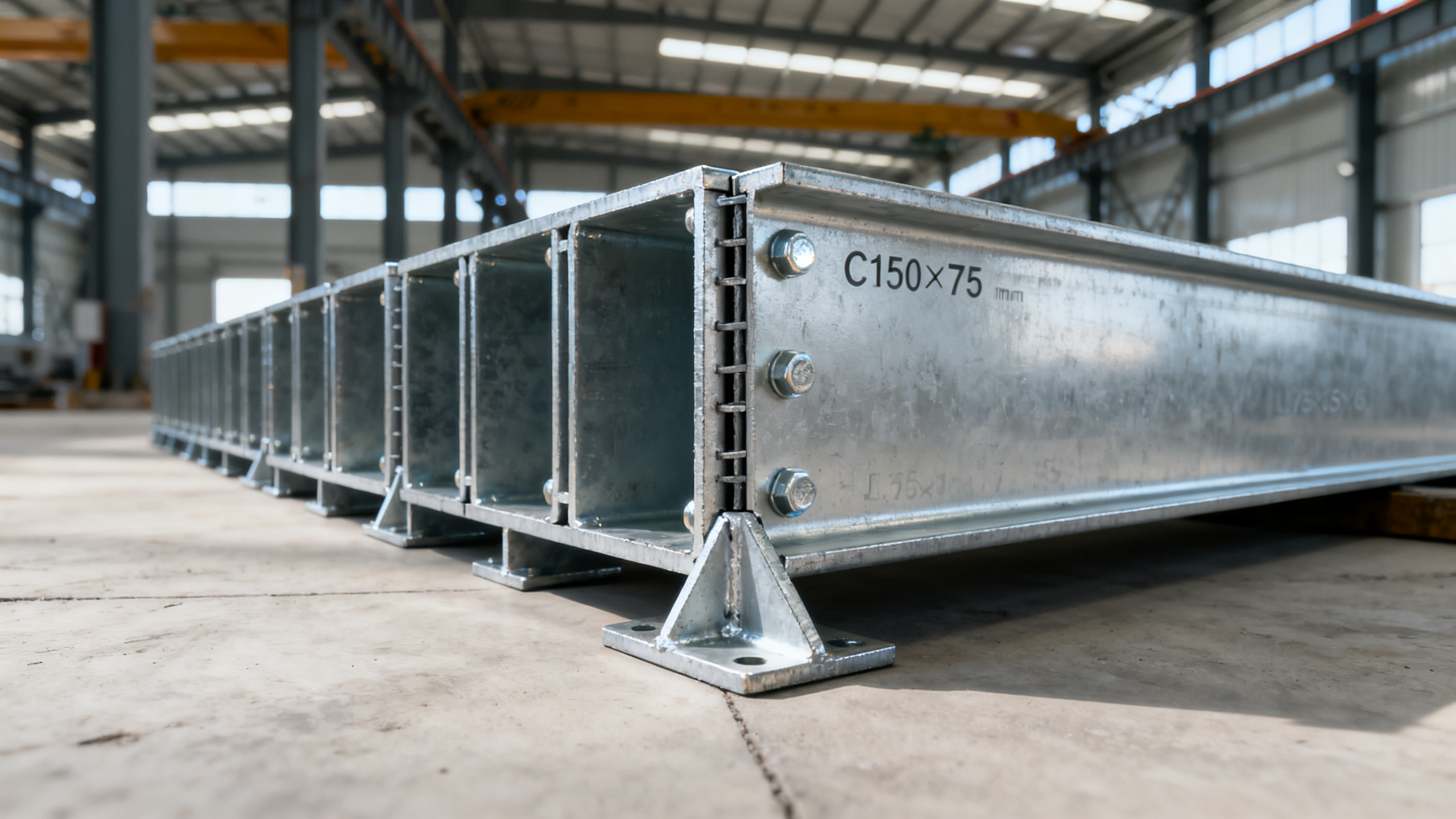
- Misaligning flange-to-flange interfaces: Assuming nominal “C150×75” dimensions match actual mill tolerances (±1.5mm depth, ±0.8mm web thickness), leading to 3–5mm vertical offset between adjacent channels.
- Overlooking weld shrinkage allowance: Not deducting 0.3–0.6mm per linear meter in welded U-channel assemblies—resulting in 4–7mm contraction post-cooling and frame distortion.
- Using inconsistent reference datum points: Measuring spacing from centerline vs. outer flange edge across different subcontractors—generating up to 6mm positional variance per joint.
How to Validate Spacing Before Cutting & Assembly
Pre-installation validation isn’t optional—it’s the most cost-effective quality gate. At Huamate Steel, our engineering team recommends a 4-step verification protocol applied before any cutting order is released:
- Confirm ambient temperature range for site location (e.g., Lagos: 22°C–36°C; Warsaw: −15°C–30°C) and apply EN 1993-1-8 Annex B thermal gap factors.
- Measure actual delivered U-channel dimensions using calibrated micrometers—not catalog specs—against batch test reports (available upon request).
- Simulate bolted interface fit using 3D clash detection software with ±0.3mm tolerance modeling, especially where mixing carbon steel angle and galvanised U-channel.
- Conduct dry-fit of first 3 bays onsite with torque-controlled fasteners and record all clearance values for statistical process control (SPC) trending.
This protocol reduces rework incidence by 74% based on internal audits across 42 completed projects in 2023–2024. It also enables us to pre-certify dimensional compliance for clients requiring ISO 9001:2015 Clause 8.5.2 traceability.
U-Channel + Angle Iron Compatibility Matrix
Not all U-channel and angle iron combinations behave predictably under load or thermal stress. The table below reflects real-world performance data from Huamate Steel’s joint testing lab (Liaocheng, Shandong), evaluating 12 common pairings under ASTM E119 fire-rated framing conditions and EN 1090-2 EXC3 execution class requirements.
Note: All spacing values assume uniform live load ≤5 kN/m² and maximum deflection limit L/360. For seismic zones (≥0.3g), reduce max spacing by 18–22%. Huamate Steel provides certified load tables and third-party FEA reports for custom configurations upon request.
Why Partner With Huamate Steel for Precision U-Channel Projects
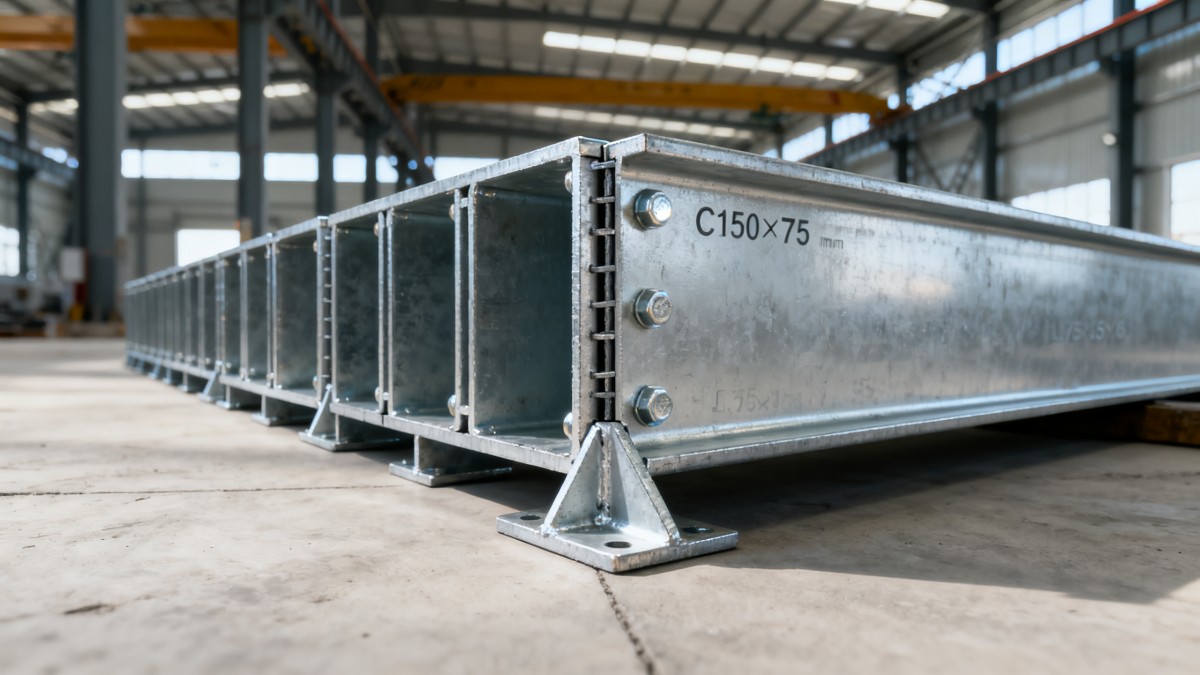
Shandong Huamate Steel Co., Ltd. operates from Liaocheng—the largest steel pipe production base and trade hub in China—with direct access to 17 Tier-1 domestic mills and integrated cold-rolling capacity. Unlike general commodity traders, we specialize in dimensional-critical applications: every U-channel batch undergoes 100% ultrasonic thickness verification and laser-profile scanning (±0.05mm resolution) prior to export.
Our international service includes: free pre-shipment dimensional audit (with stamped report), on-demand technical support in English/French/Arabic, and logistics coordination covering CFR/CIF terms to 38 ports across ASEAN, ECOWAS, and EFTA. Delivery lead time averages 12–18 days from order confirmation for standard sizes (C100–C200 series), with expedited options available for urgent projects.
For your next project involving U-channel steel, carbon steel angle, or hybrid framing systems—we invite you to share your: layout drawings, required tolerances, target delivery timeline, and certification needs. Our team will respond within 4 business hours with a dimensionally validated quotation, sample availability, and recommended compliance documentation (including mill test reports, galvanising thickness certificates, and EN 10204 3.1 declarations).
FAQ: U-Channel Spacing & Integration
What’s the minimum spacing tolerance we should specify for C150×75 in high-humidity coastal environments?
Specify ±0.6mm for flange width and ±0.4mm for web thickness—tighter than standard EN 10025-2 tolerances (±0.9mm/±0.6mm). Huamate Steel offers this as a premium option with full metrology certification.
Can we mix DC01-grade cold-rolled coil with hot-rolled U-channel in the same frame?
Yes—but only where DC01 components serve non-structural roles (e.g., cladding brackets, cable trays). Thermal expansion mismatch must be modeled separately; we provide co-efficient comparison sheets (α = 12.0 ×10⁻⁶/°C for hot-rolled vs. 11.7 ×10⁻⁶/°C for DC01).
How quickly can you issue mill test reports for urgent shipments?
Within 24 hours of production completion. All reports comply with EN 10204 3.1 and include chemical composition, tensile strength (Rm ≥370 MPa), yield strength (ReH ≥235 MPa), and elongation (A5 ≥26%).
Recent Posts
 H-beam steel deflection surprises on long-span projects—how to spot the risk earlyApr 14, 2026
 Copper tube expansion joints fail unexpectedly—what’s missing from installation specs?Apr 14, 2026
 Channel 150 x 75 used as lintel cracks near supports—thermal expansion vs. restraint mismatchApr 13, 2026
 1 angle iron used in scaffolding fails static tests when bolted—not welded. Why?Apr 13, 2026
 4 U channel steel spacing errors cause 30%+ installation delays—common layout mistakesApr 13, 2026
Leave a Message
Thank you for your interest in our products. "*" Indicates the Fields are Mandatory