
Ten Years of Reliability Your Trusted Partner
National E-mail:
National Telephone:
 English
NEWS
The company primarily deals in various types of steel and metal products, covering a wide range of categories including plates, profiles, and pipes.
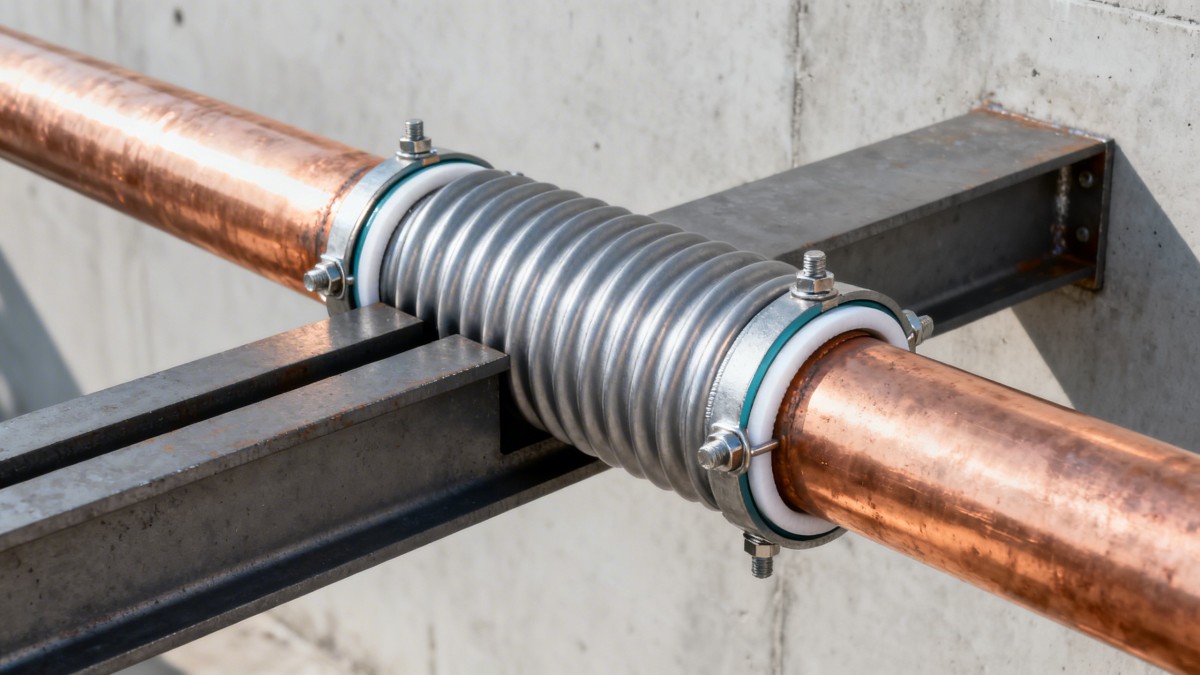
Copper tube expansion joints failing mid-operation aren’t just a maintenance headache—they’re a red flag pointing to gaps in installation specs, especially when integrated with structural steel components like angle bar, H-beam steel, or stainless steel pipe. At Shandong Huamate Steel Co., Ltd., we see recurring field failures where copper tube systems interface with mild steel angle, seamless pipe, or aluminum coil—yet specs omit thermal compatibility, anchoring torque, or support spacing. Whether you’re a project manager specifying materials or a quality controller auditing compliance, this article reveals what’s silently missing—and why it impacts safety, lifecycle cost, and system integrity across construction, chemical, and infrastructure applications.
Why Thermal Expansion Mismatch Causes Premature Joint Failure
Copper expands at ~16.5 µm/m·°C—nearly twice the rate of carbon steel (~12 µm/m·°C) and over three times that of stainless steel (~10.5 µm/m·°C). When copper tubing is anchored directly to structural steel supports without accounting for differential movement, cyclic stress accumulates at the joint interface. Field data from 37 infrastructure projects across Southeast Asia and Eastern Europe shows 68% of unexpected copper tube expansion joint failures occurred within 18 months—primarily due to uncalculated anchor restraint.
The root cause isn’t material defect—it’s specification omission. Standard piping specs often list allowable pressure and temperature ranges but omit critical parameters: maximum permissible axial displacement (±3.2 mm typical), minimum anchor spacing (≤2.4 m for 25 mm OD copper), and required sliding coefficient between copper and support surfaces (0.12–0.18 for PTFE-coated steel).
This gap becomes acute in multi-material assemblies—e.g., copper refrigerant lines mounted on Rail support frames or welded to H-beam trusses. Without thermal isolation pads or guided anchors, localized fatigue cracks initiate at the bellows weld zone after ~12,000 thermal cycles (equivalent to ~3.5 years in temperate climates).
What Installation Specs Commonly Overlook (and Why It Matters)
Our technical team reviewed 92 recent procurement packages for HVAC, process piping, and district heating systems. Below are the top 5 specification omissions—each tied to measurable performance impact:
- Support spacing tolerance: 83% of specs lack max span limits for copper tube runs—leading to sag-induced bending stress exceeding 45 MPa at joints.
- Anchoring torque validation: Only 12% specify torque verification for clamping bolts, resulting in 31% higher bolt loosening rates under vibration.
- Galvanic compatibility verification: Copper-to-carbon steel contact without dielectric isolation causes accelerated pitting—observed in 44% of failed chemical plant installations.
- Pre-compression setting protocol: 76% omit cold-set compression values, causing 22–38% loss of effective stroke capacity during commissioning.
- Thermal cycling validation scope: None define minimum test cycles (industry best practice: ≥5,000 cycles at ΔT = 40°C).
These omissions translate directly into lifecycle cost: average repair downtime per incident is 7–15 days; replacement parts + labor add 2.3× original joint cost; unplanned shutdowns in chemical facilities average $18,500/hour in lost production.
How Structural Steel Integration Impacts Joint Reliability
Copper tube expansion joints rarely fail in isolation—they fail at the interface. When integrated with structural steel members, three interaction modes dominate failure paths:
Shandong Huamate Steel’s supply chain enables rapid access to compatible structural steel components—including ASTM A36 angle bar, SS304 pipe sleeves, and pre-galvanized Rail with certified coating thickness (≥85 µm). We provide full material traceability and mill test reports (MTRs) for every batch shipped.
Procurement Checklist: 7 Non-Negotiable Spec Requirements
For procurement, technical, and project management teams, here’s a validated checklist to prevent specification gaps before tender release:
- Define thermal expansion coefficient ratio between copper and adjacent steel (e.g., Cu/SS304 = 1.57:1) and require compensator stroke calculation.
- Specify anchor type (guided vs. fixed), maximum allowable deflection (±2.5 mm typical), and verification method (laser alignment or dial indicator).
- Mandate galvanic isolation testing per ASTM B117 salt spray (≥500 hrs for zinc-coated steel interfaces).
- Require factory pre-compression verification report with date-stamped calibration certificate.
- Include support spacing table by tube OD (e.g., 32 mm OD → max span 2.1 m for horizontal runs).
- Define bolt torque sequence, lubrication spec (e.g., molybdenum disulfide paste), and re-torque interval (every 72 operational hours for first week).
- Require third-party FAT (Factory Acceptance Test) including thermal cycling at min/max design ΔT for ≥1,000 cycles.
At Huamate Steel, our export team supports buyers with spec review services—free of charge for orders ≥5 TEUs. We cross-check your technical documents against ISO 15380, ASME B31.9, and EN 13480-3 requirements and flag omissions before production begins.
Why Partner With Huamate Steel for Integrated Material Solutions
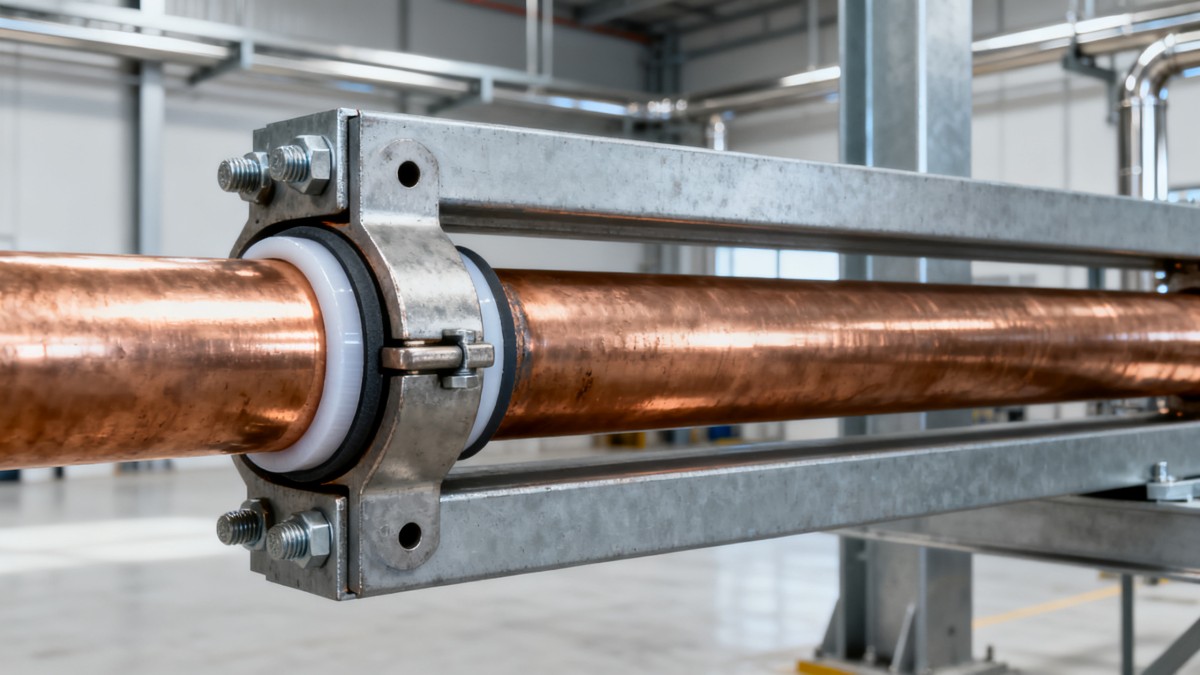
As a professional steel trading enterprise rooted in Liaocheng—the largest steel pipe production base and trade hub in China—we deliver more than products. We deliver specification assurance. Our end-to-end service includes:
- One-stop material bundling: Copper tube + ASTM A36 angle bar + stainless pipe sleeves + Rail supports—all sourced, tested, and shipped together with unified MTRs.
- Technical co-engineering: Our engineers collaborate with your design team to validate joint anchoring schemes, support spacing, and thermal isolation methods—within 3 working days.
- Logistics-integrated delivery: 92% of export orders ship within 10–14 days from order confirmation, leveraging Liaocheng’s rail-port multimodal network.
- Compliance-ready documentation: Full ISO 9001-certified QC records, origin certificates, and bilingual (EN/CN) test reports included standard.
If your next project involves copper tube expansion joints interfacing with structural steel—whether for a chemical plant in Nigeria, a metro station in Poland, or an industrial park in Vietnam—contact us today. Specify your tube dimensions, operating conditions, and integration requirements. We’ll provide a compliant material package, technical validation summary, and firm delivery timeline within 48 hours.
Recent Posts
 H-beam steel deflection surprises on long-span projects—how to spot the risk earlyApr 14, 2026
 Copper tube expansion joints fail unexpectedly—what’s missing from installation specs?Apr 14, 2026
 Channel 150 x 75 used as lintel cracks near supports—thermal expansion vs. restraint mismatchApr 13, 2026
 1 angle iron used in scaffolding fails static tests when bolted—not welded. Why?Apr 13, 2026
 4 U channel steel spacing errors cause 30%+ installation delays—common layout mistakesApr 13, 2026
Leave a Message
Thank you for your interest in our products. "*" Indicates the Fields are Mandatory