
Ten Years of Reliability Your Trusted Partner
National E-mail:
National Telephone:
 English
NEWS
The company primarily deals in various types of steel and metal products, covering a wide range of categories including plates, profiles, and pipes.
When bending hot rolled angle steel on site, carbon steel angle iron behaves very differently from stainless—especially due to its lower yield strength. Understanding what yield strength really means isn’t just theoretical: it directly impacts field fabrication of mild steel angle iron, carbon steel c channel, galvanised angle bar, and even 4 u channel steel. For project managers, procurement teams, and steel fabricators handling C beam steel or channel 150 x 75, misjudging this property can lead to springback, cracking, or failed QA checks. At Shandong Huamate Steel, we supply certified carbon steel angle, 1 angle iron, and other structural profiles—engineered for predictable performance under real-world bending conditions.
Why Yield Strength Dictates Real-World Bending Behavior
Yield strength is the stress at which a material begins to deform plastically—i.e., permanently. For carbon steel angle (e.g., Q235B or ASTM A36), typical yield strength ranges from 235–250 MPa. In contrast, common austenitic stainless steels like 304 or 316 exhibit yield strengths of 205–310 MPa—but with significantly higher work-hardening rates and elastic modulus differences that alter bend response.
On-site bending of carbon steel angles often requires less force initially but shows greater springback (typically 2°–5° for 90° bends in 50×50×5 mm sections). Stainless grades resist initial deformation more strongly but hold shape better post-bend—critical when fabricating precision frames or load-bearing brackets. This divergence isn’t about “better” or “worse”; it’s about matching mechanical behavior to application requirements.
Misinterpreting yield strength as only a tensile test value leads to over-engineering—or worse, under-specifying support tooling. At Huamate Steel, every batch of carbon steel angle undergoes third-party tensile verification per EN 10025-2 or GB/T 700, ensuring consistency across delivery lots within ±5 MPa tolerance.
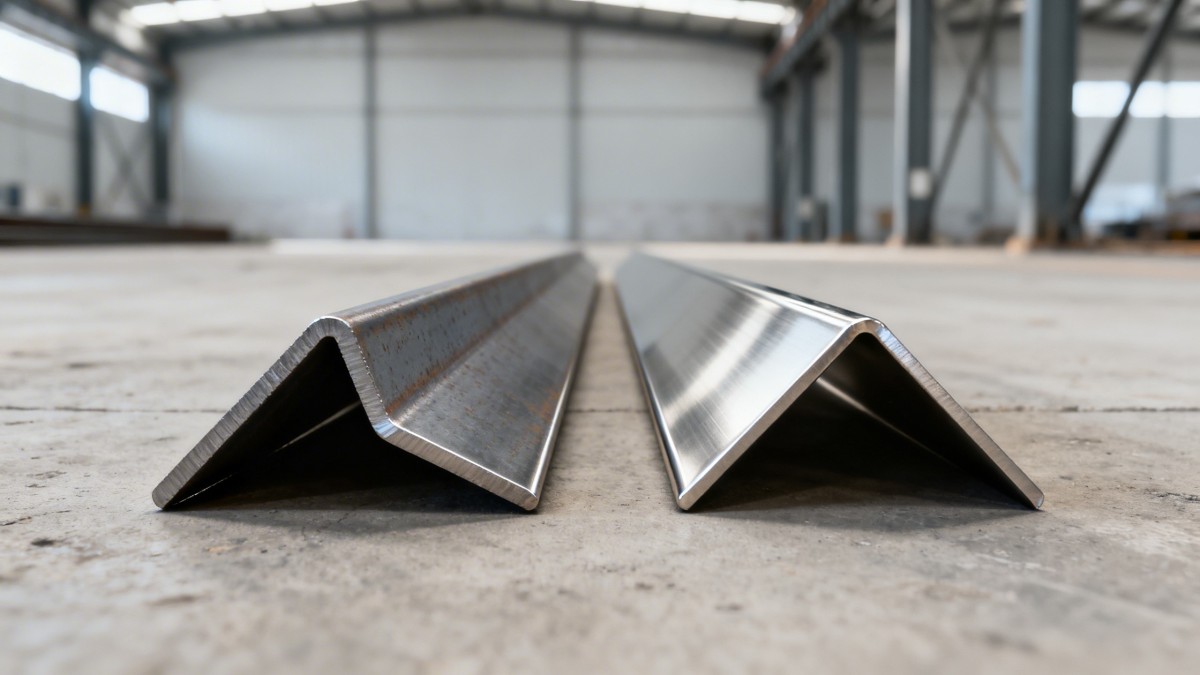
Carbon vs. Stainless Angle: Key Field Performance Differences
The practical implications go beyond lab data. Here’s how they manifest during manual or hydraulic bending:
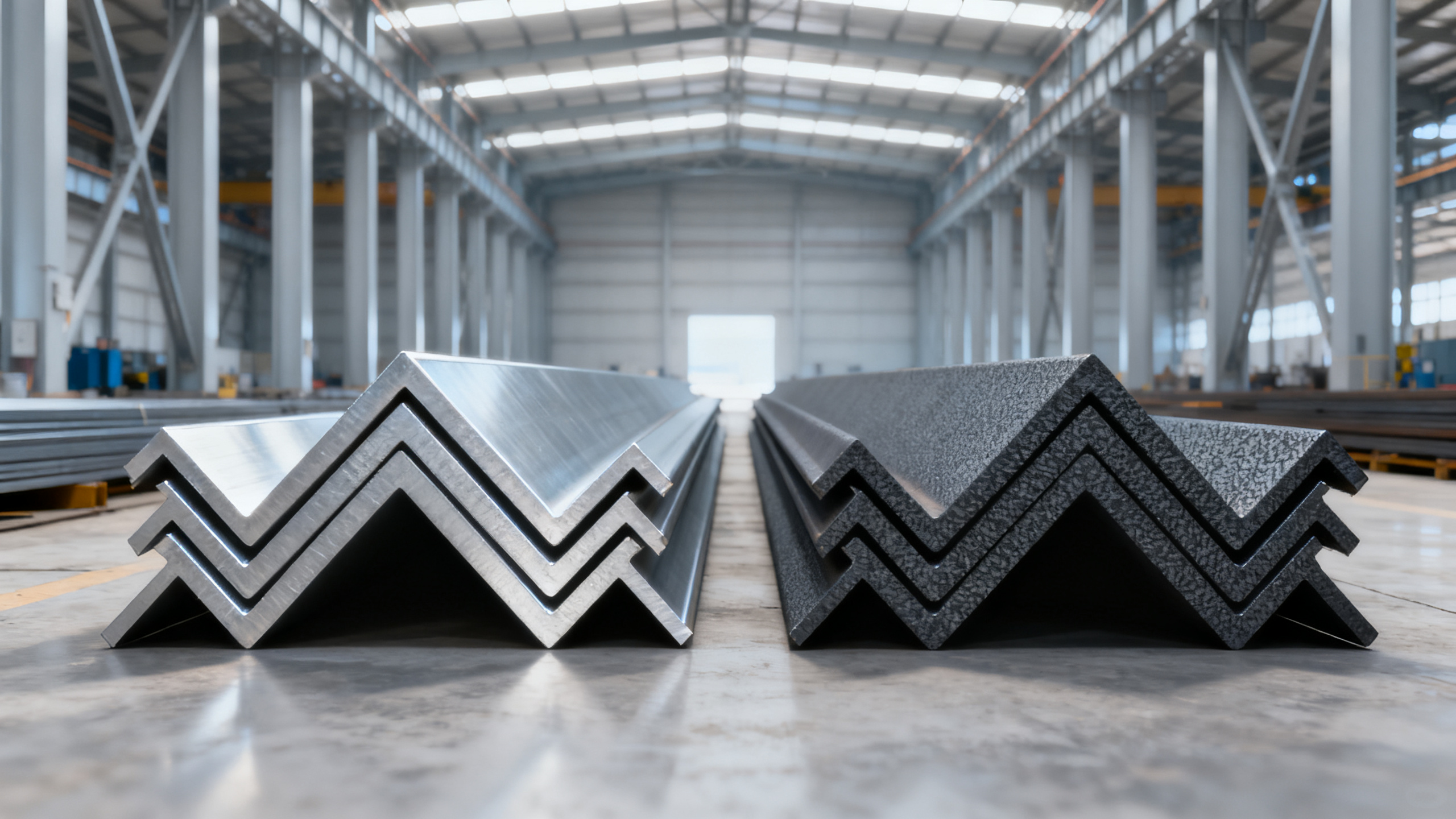
This table confirms why many fabricators pre-bend carbon steel angles by 3°–4° extra to compensate—while stainless parts often require no overbend. It also explains why 310S Stainless Steel Pipe is preferred in high-temperature exhaust systems: its elevated yield strength retention above 800°C makes it resistant to creep-induced distortion where carbon steel would sag or deform.
What Happens When You Ignore Yield Variability?
- Cracking at inner radius during cold bending of 1 angle iron—especially if grain direction aligns poorly with bend axis;
- Excessive die wear when using same tooling for both carbon and stainless profiles;
- Non-compliance with ISO 9001 Clause 8.5.2 (production process validation) due to unverified springback allowances.
How Procurement Teams Should Evaluate Bending Suitability
Procurement decisions shouldn’t rely solely on catalog specs. Here are five critical checkpoints before finalizing carbon steel angle or stainless alternatives:
- Confirm actual yield strength testing reports—not just grade designation—per lot number, especially for orders exceeding 10 metric tons;
- Validate bend radius compatibility: carbon steel angles below 3 mm thickness risk fracture unless minimum inside radius ≥ 2× thickness;
- Assess surface condition impact: mill scale on hot-rolled carbon steel increases friction during bending—requiring 15–20% higher tonnage than pickled stainless;
- Review thermal history: normalized carbon steel angles show tighter yield strength dispersion (±3 MPa) vs. hot-rolled-only batches (±8 MPa);
- Request dimensional stability data for bent components—Huamate Steel provides post-forming flatness tolerances per EN 10279 (≤ 1.5 mm/m for angles ≤ 75 mm).
For projects requiring mixed-material assemblies—such as hybrid structural frames combining carbon steel c channel and stainless trim—our technical team offers free joint compatibility analysis, covering thermal expansion mismatch (12.0 vs. 17.3 µm/m·K) and galvanic corrosion risk mitigation.
Why Partner with Huamate Steel for Structural Angle Supply
Shandong Huamate Steel Co., Ltd. operates from Liaocheng—the largest steel pipe production base and trade hub in China—with direct access to integrated mills producing certified carbon steel angle, galvanised angle bar, and precision-rolled stainless profiles. Our export-ready inventory includes:
- Carbon steel angles (Q235B, Q345B, ASTM A36) in sizes from 25×25×3 mm to 150×150×12 mm;
- Stainless steel angles (304, 316, 310S) with full traceability to melt batch and heat treatment records;
- Custom-cut and pre-bent angles—delivered with bend angle verification reports (±0.3° accuracy) and surface roughness logs (Ra ≤ 3.2 µm).
We support global buyers with end-to-end export services—including documentation for CE marking, ASME Section II Part A compliance, and customs clearance in 27 countries. Lead time for standard carbon steel angle is 7–12 days from order confirmation; stainless grades ship in 10–15 days with optional expedited logistics via Qingdao or Tianjin ports.
Contact our engineering sales team today to request: (1) yield strength verification reports for your next shipment, (2) customized bend allowance charts for your specific press brake setup, or (3) comparative cost analysis between carbon and stainless solutions for your upcoming infrastructure project.
Recent Posts
 Why stainless steel pipe corrosion resistance varies by grade in 2026Apr 14, 2026
 Copper tube thermal expansion rates differ significantly between annealed and hard-drawn statesApr 14, 2026
 Steel rebar yield strength testing often misses real-world bond performanceApr 14, 2026
 Angle bar vs. mild steel angle: Which delivers better weldability for structural framing?Apr 14, 2026
 Jharkhand Steel Plant Blast: 1 Dead, 7 Injured, NHRD Probe LaunchedApr 13, 2026
Leave a Message
Thank you for your interest in our products. "*" Indicates the Fields are Mandatory